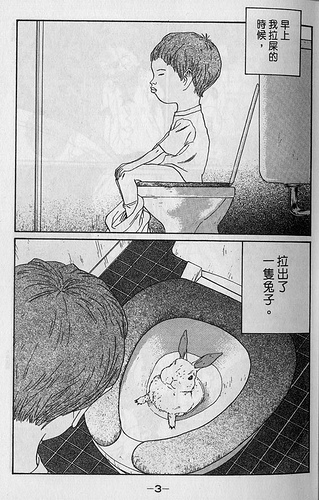
I feel like I should have a toilet category. A recurring symbol in my dreams and life.
I feel like I should have a toilet category. A recurring symbol in my dreams and life.

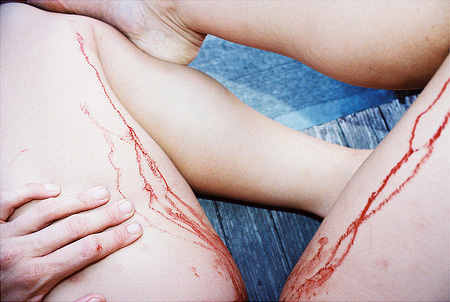
Lump indigo (blue)
Old recipe from Outer HebridesBoil wool with onion skins till clear yellow, then let wool dry. Have an old pail filled with urine at least two weeks old, or until skin forms on top… Put lump indigo in a muslin bag, heat the “bree” by placing a hot stone in it. Squeeze in the blue bag. Wet the wool and place in the liquid. Cover the vessel and place where it will keep warm… For navy blue, 11 to 21 days are required. Fix with boiled sorrel roots as rinsing water.
— Dye Plants and Dyeing, Brooklyn Botanic Garden Record, 1964.
Books about natural dyeing have a lot of lore I hadn’t foreseen. So many smells! Boiling weird fungi, soaking fiber with onions (“It will take at least four washings to eliminate the odour”), fermenting urine. One book detailed an argument between the author and her editor about whether traditional Harris tweed, dyed with lichens, smelled “musty” or, less judgmentally, “earthy.” I had no idea that tweed used to have a smell. I am fascinated by this, and want to dye all my clothes with different plants to get to know the smells.
Why don’t I expect my clean clothes to have a smell? Not a laundry scent, but a part of their nature. I can remember talking about the smell of my clothes like a normal thing, all the time. Wool sweaters smell sheepy if I get wet in the rain. A couple of weeks ago I told someone (who?) that I liked the smell of raw silk, because I was knitting with a silk blend yarn. I can recall the scent of cotton in my mind’s nose: wet, dry, or hot. Why did I still think of clothes as odourless?
Heather wrote once (or maybe we spoke) about why people are so obsessed with genital odours. Do they smell right? Do they smell too strong? How to keep the smells in control? She suggested that this was partly because we have come to expect the entire rest of our bodies to have no odours at all. Healthy hair, feet, armpits, mouths, and skin in general all have smells, too, but between washing and deodorizing they’ve been redefined as ideally odourless. It’s total fantasy, bodies still smell, but we expect odourlessness. (Like my clothes!) Compared to that, genitals are almost getting smellier by contrast.
Thinking about the more familiar politics of body odours makes me even more interested in knowing what smells are required to make the colours in my clothes. These plant dyes seem like an opportunity to make experiential connections, to know things by observation. To have know what clothes smell like and why, instead of not knowing what shocking petrochemical smells are happening at distant textile factories. It feels grounding. Educating my mind’s nose. I have some pondering to do, regarding wood smoke and other smells that have been banished from modern, civilized, classy life.
I think I will start slow, though, with tea and lavender dyes. Fermenting a bucket of my own urine is going on the “someday I will peek behind this curtain” list along with attending a pig or goat slaughter. Someday.
I was going to quit making movie lists this month, but I keep them for myself on paper anyway. As long as I post other things too, I don’t mind them being on here.
Titles in bold are things I’m especially glad I watched.
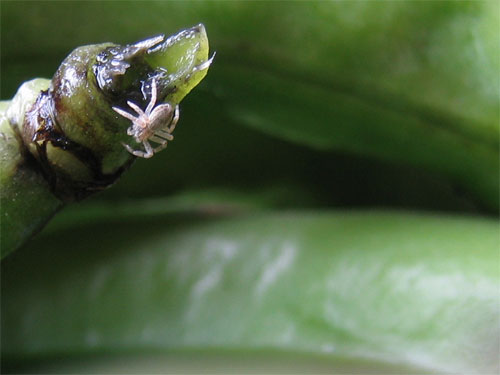
This little white spider came in on some fava beans from the garden. We are finding spiders that none of us recognize, at the shared garden. Very good.
Unyeasted breads have a deep, hearty, honest spirit with a certain substantial integrity. Dense and thick-crusted, they require a good bread knife for cutting and a certain endurance for chewing…
No matter how much I mentioned the dense, “bricklike” nature of some of these breads, still I received many letters from people wondering why the bread came out of the oven like a piece of building material. O.K., they are not to everyone’s taste, but some people really like this sort of thing: “How real,” they say, “How flavorful.”
— Edward Espe Brown in The Tassajara Bread Book, 25th Anniversary Edition
I’ve been finding a lot of inspiration in a particular kind of far-out food book. Not dietary inspiration; something like philosophical inspiration. Emotional inspiration? Attitude inspiration. The connecting thread seems to be authors who used to practice more extreme diets. Former vegans, former macrobiotics, former hippies. Some of these books have consistent ways of respecting radicalisms and moderations at the same time, finding another level of inclusion where you get the thorough, grounded ethics of radical thought without the isolating righteousness. I find myself re-reading bits of non-content like the introduction to a recipe, just for the tone or the attitude.
Does that Bread Book passage do any of that for anybody else? I know I’m reading the way I need to read.
This is helping me rename a personal communication quest that I’ve been naming and renaming for, I don’t know, fifteen years? My teenaged fixation was how to be honest and also nice (both in the sense of liked and in the sense of kind). Later it was how to have a critical analysis without alienating people who don’t. How to be compassionate without self-censorship. How to make space for differences without them being cast as disagreements or negativity. How to maintain boundaries without being judgmental. Consideration without passivity. Empathy without enabling. Belonging without conformity. How to make connections across differences. All of these draft mission statements have been discarded or modified, but I’m getting somewhere. I want to joke that it wouldn’t be hard to be both more honest and more kind than teenaged me, but that isn’t true. It has been hard!
Flipping through a chapter called Vegetarian Ethics and Humane Meat that kept me up late last night, I have totally failed to find a quotable section. I started just collecting words. “Much depends,” “life and death and life,” appreciation, reflection, mistakes, “not so easy,” “Plan B,” courage, “emotionally spent,” responsibility, “more directly involved,” experiments, clumsy, “I’m very curious,” “our memories diverge… isn’t memory funny?” Vocabulary for a big, thoughtful mess.
Who said that keeping up with fashion is the ultimate way to create anxiety? Connecting people in a big mess seems like the opposite to that. Seeking ways for many fashions to co-exist together is comforting and useful. So I guess that’s the communication quest for now. It must seem like this is too abstract to possibly be useful in my real life, but I bet I will refer to this in the next 24 hours, trying to explain a decision or action to someone. “It’s like the unyeasted bread! I know how to do this!”

Typos create alternate realities. From the promo copy for Mauve: how one man invented a colour that changed the world, in the local library’s online catalog. Surreal book titles create alternate realities, too.
Bold means I’m glad I watched it.
This month’s lists are evidence that my neighbours Casey and Jessica are fond of renting entire series of Hollywood movies. I have also watched with them: all the Die Hard movies, all the Rambo movies, Alien and Predator in preparation for Alien vs. Predator, and probably more.
The fact that I go along for these action movie marathons could probably go in the same category as the facts that I only like to watch sports when international championships are broadcast at 4 in the morning, and that if I don’t see the midnight premier of questionable superhero movies I probably will never watch them. Bland content is a good foil for intense viewing contexts.
The impassioned claim that there exists an unemotional, value-free scientific method (or context of justification) may be interpreted as an emotional rejection and repudiation of the feminine and, if this is so, it would mean that scientific practice carried out (supposedly) in an “objective,” value-free, unemotional way is in fact deeply and emotionally repressive of the feminine.
— Brian Easley, “Patriarchy, Scientists, and Nuclear Warriors”
Galen forwarded me a reading for his feminist men’s discussion group and I laughed out loud at this part. The rest is here: Patriarchy, Scientists and Nuclear Warriors, by Brian Easlea.
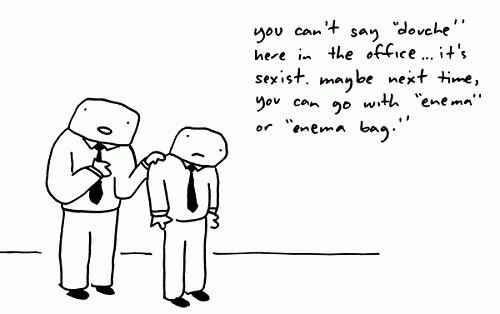
Surprisingly / not surprisingly, I have thought a lot about the value of “douche” as a politically correct cuss word. I’ve adopted it as my all-purpose, positive family values cussing option. My take is that douches are maligned for feminist and body-positive reasons. Douches are marketed to clean vaginas that are already self-cleaning, and the unnecessary douches can cause microflora imbalances and infections. Douches are terrible, urban legend birth control that can actually increase the chances of conceiving. Douches: body hating, body damaging, anti-choice, agents of unnecessary consumption. And fun to say. Doooosh.
Meanwhile, almost every other cuss word is maligned for some body-hating, bigoted reason. Genitals, bodily fluids, sexual activities… I love all those things. I need a bigger pallette of loving cusses before I can give up the fun sounds of fuck, shit, tits, ass, cock, sucking, blowing, and company, but it’s good to have a start.
Other takes on douche as a swear? Seeing it paired up with enemas is actually giving me pause. I’m thinking the only reason enemas get a bad rap is because of taboos about buttholes, and related taboos about gay sex and maybe enema sex play. I’m pretty much pro-butthole on all those issues. So then I wonder if I should be considering the sex play possibilities of douches, and any douche fetish communities I might be further marginalizing. The problem: everything can be used for sex play. That criteria would eliminate every possible PC swear word. I’m sticking with douche for now, but I’d love to hear from anyone offended by that.

Every time I mention that I use homemade deodorant, I realize that I’ve never actually linked to the awesome internet recipe that I use.
So here it is, Angry Chicken’s homemade deodorant recipe, styled after Lush’s Aromacreme natural deodorant but less likely to cause a rash. This is the only deodorant recipe I’ve ever tried, and I’ve been using it happily for about a year. It’s cheap and it works and it gives me a better vibe than the “you stink” industry.
Our personal household version is a little simpler, like so:
5 Tablespoons shea butter
3 Tablespoons baking soda
2 Tablespoons corn starch
Essential Oil (ylang ylang, rosewood, nutmeg and cinnamon)
Melt, stir, pour into container(s), cool. Store extra in the fridge.
In her golden years, my mom suffers from Dementia with Lewy Bodies (think Parkinson’s + Alzheimer’s).
Here we are in the garden. She’s calling me Jim (my father’s name) and thinking she’s having a dream…
I expected this video to make me sad, but I felt happy watching it. I spent a lot of afternoons sitting in gardens with my grandpa in his advancing dementia, and our interactions were often like this. Me guessing what would help him or soothe him, just sitting and telling each other we loved each other with words and pats and hand squeezes. My trying to understand his observations but not really getting it; him trying to understand my observations but not really getting it; both of us trying to be ok with that. I’m happy that sometimes when communication breaks down, it can break down into just inarticulate love.
And I just posted about putting ugly things in context to make them beautiful.
I have often wished that the function of the beauty industry was to help people get better at beholding beauty. It could be like art appreciation classes that show you what can be appreciated about art you didn’t like looking at before. That might even be the root of my complicated gut reactions about body image activism performances like burlesque. Does it help me see beauty in a new place, or does it just involve new people winning at the same old beauty contests? I think my guts know I’m looking to broaden my beholding skills, not get caught up in competitions.
So I liked this comment about aesthetics and perception, for focussing on “coming to terms with what you consider ugly,” and on ways to help people do that.
Beauty can be coaxed out of ugliness. Wabi-sabi is ambivalent about separating beauty from non-beauty or ugliness. The beauty of wabi-sabi is, in one respect, the condition of coming to terms with what you consider ugly. Wabi-sabi suggests that beauty is a dynamic event that occurs between you and something else. Beauty can spontaneously occur at any moment given the proper circumstances, context, or point of view. Beauty is thus an altered state of consciousness, an extraordinary moment of poetry and grace.
… It is almost as if the pioneers of wabi-sabi intentionally looked for such examples of the conventionally not-beautiful— homely but not excessively grotesque— and created challenging situations where they would be transformed into their opposite.
— Leonard Koren in Wabi Sabi for Artists, Designers, Poets and Philosophers
Reading this brought up a big sensory memory of what that feels like— I get pretty thrilled and spaced out by perception shifts. I heard an NLP trainer say that it’s common to get spaced out by big new ideas, that spacing out is the physical sensation of a bunch of your brain synapses reorganizing at once. I don’t know if that’s true, but the idea delighted me.
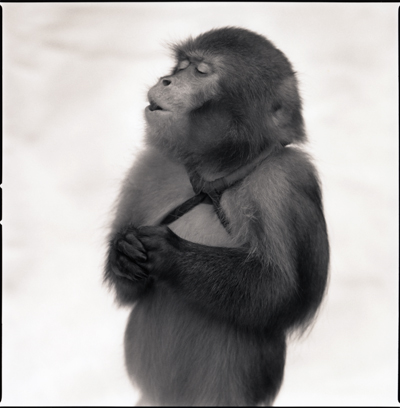
(Excerpt from the Suo Sarumawashi Association’s official introduction)
Sarumawashi, literally “monkey dancing” evolved over a 1000-year history in Japan. Ancient Japanese chronicles refer to it as a form of religious ritual designed to protect the horses of warriors. It later developed into a popular form of festival entertainment, and was performed all over Japan from temples to imperial courts. Today, Sarumawashi is ranked alongside Noh and Kabuki as one of the oldest and most traditional of Japan’s performing arts. It features acrobatic stunts and comedic skits performed by highly trained macaque monkeys.
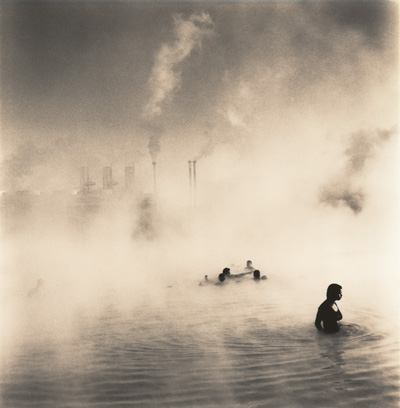
Suddenly I am collecting mystical pools.
A lot of Hiroshi Watanabe’s photographs look mystical / mythical / magical to me, like icons or tarot cards. I think it is partly the square shapes— formal, symmetrical.
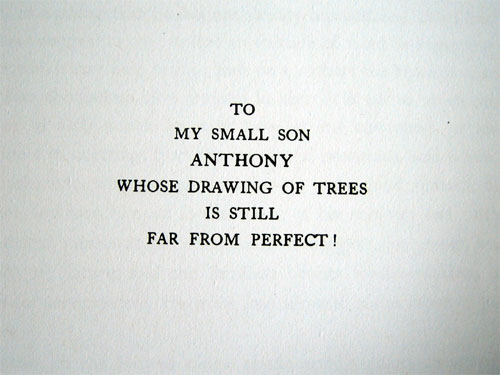
Alternate title: To Anthony’s dad whose use of exclamation marks is getting out
of hand!
How do I protect [my disaster supplies] from the unprepared and desperate have-nots if I don’t already have a fort-knox style bunker?
Obviously the first priority will be to avoid conflict in the first place, if possible. The cause of conflict in your question was a shortage of supplies, and the potential aggressors are disorganized. So the easiest way to avoid conflict in that case is to make sure that there are enough essential supplies to go around for your neighbours. . . . That’s why I think that community sufficiency is much more important than just self-sufficiency.
— Aric McBay on Strategies for shortages, from In The Wake: A Collective Manual-in-progress for Outliving Civilization
I often feel self-conscious reading (and liking!) a certain type of anti-civilization literature. I’m trying to come up with a concise way to explain the appeal without just making a joke out of it (crazy survivalists!). Part of it is this struggle to take care of oneself in a cooperative way. The whole anti-civilization argument, at least from the people I’ve been checking out, comes from the premise that civilization makes cooperative self-care impossible, because the civilized are always destroying and overshooting their (our) landbase and depending on imperialism to survive. It’s that situation where one competitive person can ruin a whole group’s attempt to use cooperation and consensus.
So there are a whole lot of ideas in there about resisting a hierarchical, destructive culture without creating a new hierarchical culture in its place.
Another affirmation that cooperation can be more empowering than only looking out for number one, this time from economics and media theory. This is Douglas Rushkoff in his opening invocation at Personal Democracy Forum 2008 (transcript, video/audio). If you’re going to listen to a whole presentation, I prefer his similar 56th Annual Korzybski Lecture but I couldn’t find a transcript of that one.
The individual we think of today was actually born in the Renaissance. The Vesuvian Man, Da Vinci’s great drawing of a man in a perfect square and circle— independent and self-sufficient. This is the Renaissance ideal.
It was the birth of this thinking, individuated person that led to the ethos underlying the Enlightenment. Once we understood ourselves as individuals, we understood ourselves as having rights. The Rights of Man. A right to property. The right to personal freedom.
The Enlightenment— for all its greatness— was still oh, so personal in its conception. The reader alone in his study, contemplating how his vote matters. One man, one vote. We fight revolutions for our individual rights as we understood them. There were mass actions, but these were masses of individuals, fighting for their personal freedoms.
Ironically, with each leap towards individuality there was a corresponding increase in the power of central authorities. Remember, the Renaissance also brought us centralized currencies, chartered corporations, and nation states. As individuals become concerned with their personal plights, their former power as a collective moves to central authorities. Local currencies, investments, and civic institutions dissolve as self-interest increases. The authority associated with them moves to the center and away from all those voting people.
(Emphasis mine.)
I really notice the undefined “we” in that speech. He is expecting to be heard by people who take European history as their own history.
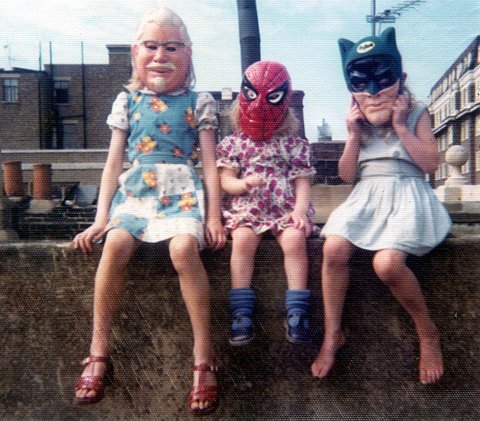
Is that Batman, Spiderman and… Colonel Sanders?
‘Individualism’ is not to be mistaken for freedom to choose moral, political and cultural alternatives of one’s own making. Each person is expected to operate ‘individually’ but in more or less similar ways and similar directions. . . . ‘Individualism’ in the United States refers to privatization and the absence of communal forms of production, consumption and recreation.
— Michael Parenti quoted by Alfie Kohn in No Contest: The Case Against Competition
This is so similar to the quotation from yesterday, about how disabled people often define independence.
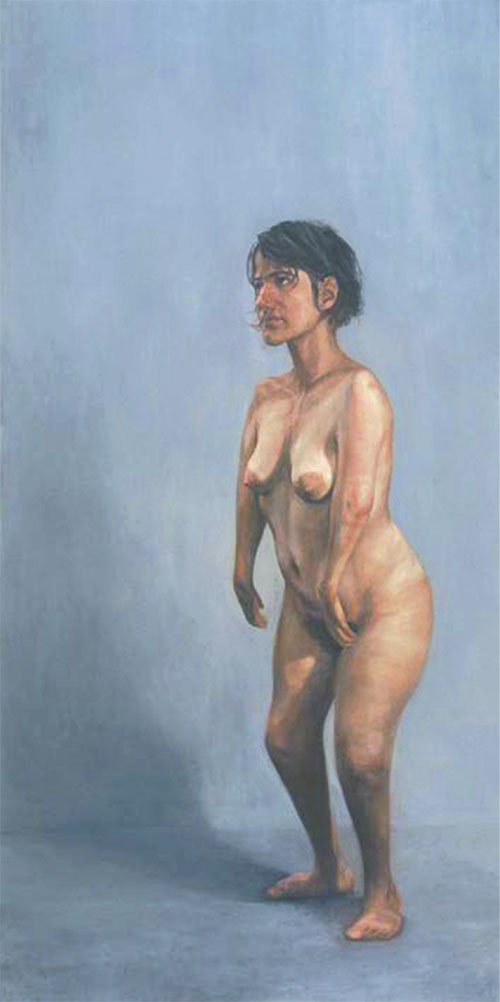
“Professionals tend to define independence in terms of self-care activities such as washing, dressing, toileting, cooking and eating without assistance. Disabled people, however, define independence differently, seeing it as the ability to be in control of and make decisions about one’s life, rather than doing things alone or without help.”
— Michael Oliver quoted by Sunny Taylor in The Right Not To Work: Power and Disability
I looked up Sunaura Taylor after enjoying her discussion with Judith Butler in the movie Examined Life. They talked about walking as it related to disability and gender issues, and about the politics of helping each other and asking for help. At one point they stopped into a thrift store to get a sweater for Sunaura, which was suddenly revealed as a Queer Eye make-over scene such as I have occasionally wished for. Queer shopping with politics intact; it was quite beautiful! I had a little thrill, there in the cinema.
Part of the thrill was seeing the two of them act out an interdependent version of shopping, with Judith helping Sunaura try things on and the store clerk adjusting her usual check out techniques. It was very clear that all of the people benefited from working together, and it was also clear that to accomplish that they had to work outside of usual store policies and etiquette expectations.
I have been finding affirmations of interdependence in a lot of different sources lately, and they really cheer me up. I’m hunting for ways to resist competition and hierarchy without resorting to competitive tactics, and in the meantime it is very encouraging just to watch people cooperate within structures that are set up to facilitate competition. Life affirming.
Taking a different angle on accepting all of us instead of competing to find the winners, here is another quotation from that essay. This is especially for Erin and anyone else who is into working less.
The right not to work is the right not to have your value determined by your productivity as a worker, by your employability or salary… What I mean by the right not to work is perhaps as much a shift in ideology or consciousness as it is a material shift. It is about our relation not only to labor but the significance of performing that labor, and to the idea that only through the performance of wage labor does the human being actually accrue value themselves. It is about cultivating a skeptical attitude regarding the significance of work, which should not be taken at face value as a sign of equality and enfranchisement, but should be analyzed more critically. Even in situations where enforcement of the ADA and government subsidies to corporations lead to the employment of the disabled, who tends to benefit, employers or employees?
One more, because I really like this question:
The minority of the impaired population that does have gainful employment are paid less than their able-bodied counterparts and are fired more often (and these statistics are more egregious for disabled minorities). To ensure that employers are able to squeeze surplus value out of disabled workers, thousands are forced into dead-end and segregated jobs and legally paid below minimum wage (for example, in the case of “sheltered workshops” for those with developmental disabilities). The condescension towards the workers in such environments is severe. Why should working be considered so essential that disabled people are allowed to be taken advantage of, and, moreover, expected to be grateful for such an “opportunity”?
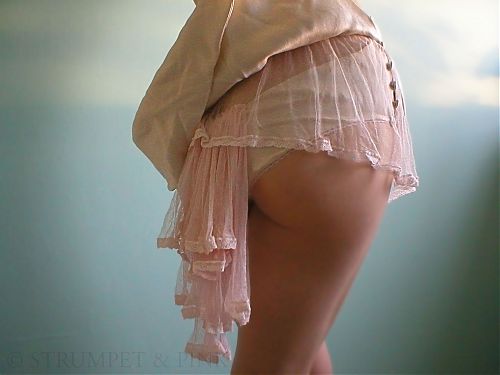
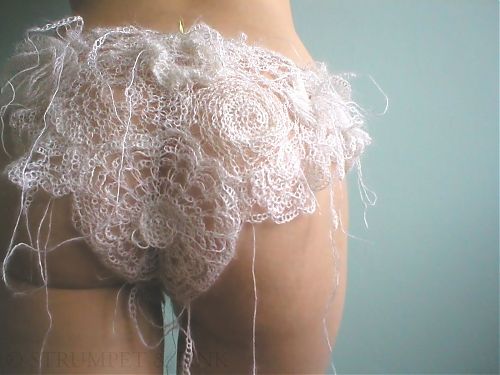

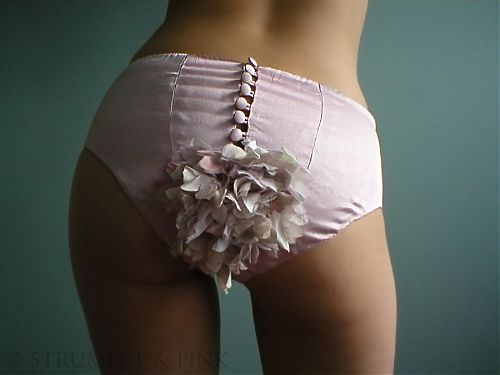
From the Strumpet & Pink website, a goal I can get behind:
Our knickers are experiential and focus
on feeling rather than objectification.
Years ago, my friend Logan talked so much about wanting velvet underwear with the pile facing inwards that someone finally made him some. Fuzzy on the inside.
Apologies for all the skinny, pale-skinned bums. I thought the ruffles were worth it. I am imagining my future undercrafts.
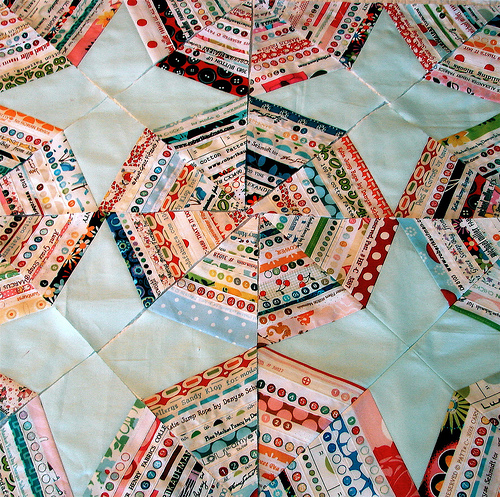
Apparently I respond to the crop marks and assorted colour spots of any kind of printing.