- How to Write a Thank You Note (The Morning News) This is a gem from the old internet by Leslie Harpold, and is the only advice you will ever need on this subject. It is a perfect, actionable formula for sincerely expressing gratitude with grace. Given that only my friends read this blog (and only a few of them), if you are reading this you are probably about to receive a thank you note in the mail and you can check how well I executed this technique 😉
- Here’s How A Registered Dietitian Meal Preps For Her Whole Family For a Week (Self Magazine) OK what? I followed a link from the host of a Health At Every Size podcast and ended up at… Self Magazine? It turns out this glossy magazine that I only know from grocery store checkout lines has multiple regular contributors who are anti-diet dietitians writing about intuitive eating and intersections of food with race, religion, gender, and poverty. This weekly meal prep advice starts from the extremely feminist premise that you probably have better things to do than cook all day, and from the extremely healthy premise that food should be delicious. See also, “I’m a Registered Dietitian and These Are the Only 3 Healthy Eating ‘Rules’ I Live By“.
- Everything You Know About Obesity Is Wrong (Huffington Post) Speaking of anti-diet, evidence-based food politics, this was everywhere in my feeds in the last couple of weeks and it deserved it. The discussion of the challenges around collective organizing for fat liberation in particular has stuck in my thoughts.
Year: 2018
Pinned in summer 2018
I was, on the one hand, deeply occupied with splitting my body into two people and then getting to know the second person. On the other hand, I had a lot of time to read while awake in the middle of the night holding that person.
A longer list with less commentary than usual:
-
- The Useless French Language and Why We Learn It (LA Review of Books). Come for the poking fun at France, stay for the insights about different kinds of languages and how they are responding to English taking over the world.
- Is Oatmeal Healthy? Here’s What the Experts Say (Time). An algorithm suggested this for me to read, which made me feel seen. But also, this is such a failure at being clickbait that is both hilarious and a work of art. Time Magazine, for some reason, is trying to drum up controversy about oatmeal but every expert they talk to immediately resolves it. Good old oatmeal, squashing any attempt to make a fuss.
- Epic Pooh, by Michael Moorcock (Revolution SF). A funny and satisfying old rant that I had never read, about the infantile prose style of a lot of epic fantasy.
- Magic Mike XXL is Basically Just “The Odyssey” But With Butts (Electric Lit). A vision of a non-misogynist hero’s journey.
- The Personal Business of Being Laid Off (Hazlitt). Mainly for articulating this idea that now comes up for me all the time in daily life under capitalism:
On my most recent watch [of the 1998 movie You’ve Got Mail], though, I found myself emotional over one particular exchange. Joe visits Kathleen in a bid to win her over romantically and begins telling her that destroying her business wasn’t personal. In response, she tells him, “I am so sick of that. All it means is that it’s not personal to you, but it’s personal to me.”
- Physicists Are Misled By Outdated Notions of Beauty (Motherboard). A philosopher describes what qualities of a theory count as beautiful in physics, how they got that way, and why they need to change. I love a critique of beauty standards, and this one was in an unexpected place.
- Seattle Researcher Documents Necrophilia Among Crows (Slog). Of course!
Pinned in June: non-depressing edition
The first argument that made me feel at all warmly about warrantless genetic surveillance
The journal Science published a response to the Golden State Killer investigation, where a suspect was arrested after a relative was identified by comparing genetic evidence from crime scenes to a 23andMe-style commercial genealogy database.
Expanding law enforcement investigations to encompass genealogical databases may help to remedy the racial and ethnic disparities that plague traditional forensic searches. In accordance with state laws, official forensic databases are typically limited to individuals arrested or convicted of certain crimes. Racial and ethnic disparities throughout the criminal justice system are therefore reproduced in the racial and ethnic makeup of these forensic databases. Genealogical databases, by contrast, are biased toward different demographics. The 23andMe database, for instance, consists disproportionately of individuals of European descent. Including genealogical databases in forensic searches might thus begin to redress, in at least one respect, disparities in the criminal justice system.
Genealogy databases and the future of criminal investigation (Science)
A fun, counter-intuitive baby name trend
Baby name news covers a lot more ground than I would have expected. This post starts with a surprising baby name trend and ends with a fairly detailed analysis of the impact of maternal age on social and political issues.
A few years back, I started a project to track down the red-blue divide in name terms. Did blue (liberal) and red (conservative) America actually name their children differently? Yes, they surely did. But how they did was a stunner. The “bluest” names were traditional, Christian, and single-sex; the “reddest” were newly invented, non-religious and androgynous. (Try it on the NameMapper: select 2004 and type in Henry, then Rylee.) In other words, our choices of names — one of the most candid, heartfelt expressions of our values and dreams — ran precisely opposite to our supposed values divide.
Red and Blue Baby Naming: Inauguration 2009 Edition (Baby Names Blog)
An endearing, bumbling discussions of plant intelligence
I love the edges where people in one discipline need ideas from another discipline. This survey of some current thinking about whether plants are intelligent involves philosophers trying to apply botany and ecology, while biologists and ecologists try to apply philosophy.
[Plant biologist Devang] Mehta believes that plants deserve respect. He just thinks confusing their qualities and abilities with those of humans is unnecessary anthropomorphizing. Venturing into the territory of philosophers, he argues that in order to qualify as “conscious,” a thing must be aware of its self-awareness, or meta-aware….
[Philosopher Michael] Marder admits that we can’t know if plants are self-conscious, because we define both the self and consciousness based on our human selves and limitations. “Before dismissing the existence of this higher-level faculty in them outright, we should consider what a plant self might be,” he says.
Marder points out that plant cuttings can survive and grow independently. That suggests that if plants do have a self, it is likely dispersed and unconfined, unlike the human sense of self.
On space and science fiction in the Arab world
This is an ok article about a topic I found very interesting– how has science fiction influenced science and space projects in the Arab world? It left me curious to know much more about the impact of having your local landscapes used as filming locations for so much sci-fi, both as distant planets and as places where archeologists dig up monsters.
A great many decision-makers, extending into the numerous members of the royal families across the Gulf, have bought into this desire to revive the Islamic scientific heritage as well as building the infrastructure that will drive it; development is, after all, meaningless without ‘sustainable’ development. And science fiction is part of the futurist vision they have of themselves: “Michael Winterbottom shot his 2003 film Code 46 partly in Dubai… parts of The Force Awakens were shot in Abu Dhabi,” as Determann’s book notes. Note the transition eastwards, since the desert planet Tatooine in Star Wars is actually the desert town of the same name in Tunisia, where much of the filming was done. The UAE has, of late, provided financial incentives for Western movie producers, itself part of its wider diversification away from oil strategy too. The same goes for their Mission to Mars.
As one project manager explains, the mission, according to Omran Sharaf, speaking in Determann’s book, “is not about reaching Mars but about inspiring a whole new generation and transforming the way youth think within the region… The goal here is hope, for humanity, for the region, for youth in countries with lots of conflict.”
Review: The Intertwined Histories of Arab Science and Arabic SFF (ArabLit)
Pin collection for May: parenting and public services
Some things I read that I loved.
Noticing different public treatment of parents of trans kids vs parents of “theybies”
The fact that reporting on trans children like Nicole has been far more sympathetic than reporting on Kathy Witterick and David Stocker’s decision not to gender their child Storm is itself very telling. While it may be confusing and shocking for the general public to imagine raising a transgendered child, the story of trans children becomes relatable by making transgenderism analogous to medical disability. It’s less than ideal, but no one can help it, and thankfully there is a course of treatment to be pursued. But the idea that parents like Kathy and David would willfully choose to offer gender self-determination to their child is apparently an outrage. Kathy and David’s parenting has been subject to pathologizing and hateful commentary from expert psychologists concerned about Storm’s development. While Nicole’s parents are portrayed as compassionate and reasonable, Kathy and David have been depicted as selfish, deceitful, impulsive, and manipulative radicals using their child to enact a damaging social experiment.
This post is from 2011, but I still see this split in 2018. The comparison to how disabilities are framed stuck out to me– somewhere I’m sure there is a parallel disability justice article that critiques pathologizing disabled kids rather than working to undermine narratives about which bodies are considered normal.
Great kids books about disability
We are about to start collecting kids books at my house, and I have been deeply appreciating the detailed reviews and lists at Books for Littles. This entire four-part series about kids books dealing with disability is fantastic. It starts with a primer on disability justice and the social model of disability, and includes some handy lists of problematic tropes in kids books as well as better features to look for. After that, big lists of recommended books! There are similar posts dealing with race, gender, fatness, single parenting, emotions, and many other common areas of failure in kids books.
Delusions of Mommy Brain
Of course, parents who do not go through pregnancy — including fathers, adoptive parents and L.G.B.T.Q. parents whose partners give birth — also experience psychological and physiological attachment, which some researchers have studied. But “daddy brain” is rarely discussed in a cultural or scientific context in association with cognitive decline.
Meanwhile, the cultural belief in “mommy brain” is so powerful that some studies have shown that pregnant women who walked into an experiment describing themselves as cognitively fuzzy were found in the lab to perform at a much higher level than what they reported. Were the cognitive changes just in their heads, or are our medical formulations missing something? In addition to the unscientific myths about hormonal women being best suited for the home and hearth, what else has propelled this broader misinterpretation about what “mommy brain” is and isn’t?
Argh, this article hits all the usual points that come up when discussing brains and biological sex. It pains me that it took the NYT to alert me that birth-induced dementia was a sexist myth.
Reframing ‘Mommy Brain’ – The New York Times
Buses > ride shares
One of my favourite recurring themes is that Silicon Valley is not as smart as it thinks it is, it just picks easy problems. It is easy to provide luxury transit for a few rich people using a subsidy from venture capital, especially if you can temporarily get away with ignoring labour laws. It is much harder to provide economically sustainable transit for a lot of people, while following labour laws. When Uber and Lyft start trying to accomplish that much harder goal, it turns out they start to look like regular old public transit buses.
It’s telling that, even while transit agencies are being told to be more like Uber and Lyft, Uber and Lyft are increasingly mimicking buses. Both companies now have “shuttle” or “line” services that operate along preset routes with preset stops during peak commuter hours, just like a bus. It’s existential to the future of these start-ups that they stop subsidizing high-end solo rides and instead cram in the maximum number of riders per vehicle—in order words, that they reproduce a bus. The basic model—a big moving container of people on a fixed route—has never stopped working.
America’s Buses Need Your Love More Than Ever – The Atlantic
Have they always been displacegrounds?
Here in Victoria, playgrounds and their associated bylaws get used to displace homeless people. This article is about something else, but I snagged on this aside about the invention of playgrounds as a way to displace children from the public streets where they used to play.
The last great obstacle for those wanting to secure streetspace for cars were the angry mothers of America who saw their children killed or maimed by cars in the streets. Enter: the playground. That little zoological garden into which we still place our kids was an invention of the automobile industry as a way to appease mothers and get the little rascals out of the way.
Intermediate french fashion slang: Vogue France
Language is different in real life than it is in literature, so part of my intermediate French reading practice is following blogs and magazines. A surprisingly deep source of weirdness that I have become very fond of is Vogue France.
My first thought about high fashion is usually that it is toxic– misogynist and body-fascist– but to its credit, it is also very strange. A way to get most of the weirdness and a minimum of the poison is to follow the vogue.fr RSS feed. It contains very few and very tiny photos, and a seemingly random selection of their incredible headlines.
What is amazing about Vogue France headlines? They are clearly written in French, but they contain hardly any French words. This is mind-melting and I feel certain that learning how to make French phrases out of English slang is improving my grasp of French grammar.
A recent example:
Tendance dad shoes : 13 sneakers normcore ultra mode
You get to learn French words for “trend” and “fashion”, but after that it is only the word order that distinguishes this from the English equivalent, “Dad shoes trend: 13 ultra fashionable normcore sneakers”.
Pin collection for April
Some favourite things I pinned over the past few weeks.
On the communication value of ums and uhs
Counter to what Toastmasters would have you believe, we seem to use more “disfluencies” like um when we know what we’re talking about, and saying “um” helps listeners understand us better. I am used to watching for and celebrating the ways that real life is messier than idealized definitions when it comes to things like body diversity, relationships, even economics. I am delighted that spoken language is messy too!
Your Speech Is Packed With Misunderstood, Unconscious Messages (Nautilus)
Deafness on film
Beware the spoiler for A Quiet Place, but I learned a lot from this article about historical and contemporary representation of deafness and Deaf culture in movies. It includes some thoughtful criticisms of The Shape of Water, and introduced me to the term Deaf gain as a positive counter to the concept of hearing loss.
Quiet Places (LA Review of Books)
The Volcano is back!
So exciting to see The Volcano back in action! They even have a podcast up. I read several great articles over there this month, and bookmarked some more for later. Here is one that stuck out to me, for seeing through the healthcare rhetoric around government responses to the overdose crisis in BC.
What if Black Panther had been created by an African?
This reads like an undergraduate assignment, but I enjoyed this comparison of Black Panther to Kwezi, a more recent superhero created by black South African visual artist Loyiso Mkize. The rest of the site is worth exploring too, if you are interested in African speculative fiction.
From Kwezi to The Black Panther: The Progressive Politics of the Black Superhero in Comics (Omenana)
Long profile of what is scary about Palantir
Even Google has noticed that I “show interest” in aspiring vampire Peter Thiel and his company Palantir. Palantir somehow keeps a lower profile than other giant tech companies and I haven’t seen them mentioned in much reporting about the Facebook/Cambridge Analytica story, despite being involved on both sides of the data breach.
This profile provides rare descriptions of what Palantir’s surveillance software actually looks like and what it does, as well as who their clients are (dictators, cops, and maybe your boss) and how real communities have been affected.
Palantir Knows Everything About You (Bloomberg)
Fun excerpt from Fabulous: The Rise of the Beautiful Eccentric
Making the case that fashion-haters are the ones who are really obsessed with superficial appearances.
I have a pair of spiked wedge shoes that are always a conversation piece when I wear them out. They are my favorite thing, and I would be totally depressed if I lost them somehow. Whenever people see them in my room they always ask to try them on. Everyone does this—male, female, heterosexual, gay. They try them on for the fun of it and they love the feeling the shoes give them. But then they say: “I could never wear those,” a phrase we have all used to describe an item of clothing that makes us uncomfortable or that we don’t see ourselves in because it goes against the image we have already constructed for ourselves. But who actually says we can’t wear it?
The power of appearance, that’s “who.”
Fashion naysayers are often people who are “uncomfortable with taking full responsibility for their own looks,” Anne Hollander tells us, “who either fear the purely visual demands of social life—‘appearance’ or ‘appearances’—or don’t trust the operation of their own taste,” which means in the end that they “feel threatened and manipulated by fashion.” Negative theories of appearance emerge out of a nervousness and anxiety about one’s own way of looking, which coincidentally works to reinforce the power of appearance.
Why Is Caring About Fashion Considered Unserious? (Literary Hub)
Mushrooms make their own weather
Because of course they do. Never bet against a fungus!
Everybody Talks About the Weather But Mushrooms Do Something About It. (Small Things Considered)
Intermediate queer arab-french YA: L’armée du salut
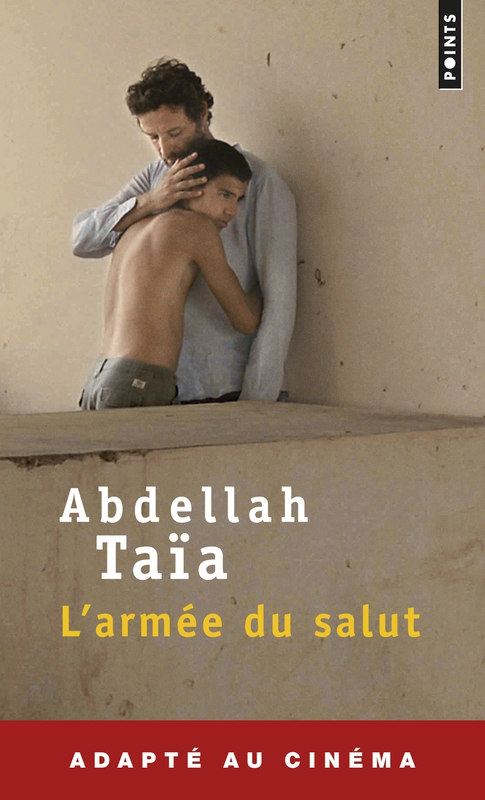
People seem to love this book but myself I found it dull. A book involving incestuous crushes and public sex– dull! Clearly your experience may vary.
On the plus side, this novella is under 150 pages, a story about a gay muslim protagonist with a happy (enough) ending, and a good way to learn some sex slang and a bit about life in Morocco in the 1990s. My favourite parts were the discussions about speaking French versus other languages, and where all the multilingual characters learned French. Morocco, Switzerland, etc. Finding francophone authors is a fast way to learn some geography and history– which regions have French-speakers and why?
A pin collection: mainly tech overlords
Since the demise of del.icio.us I’ve been pinning my bookmarks on a side blog. Given how much I enjoy it when my friends write roundup posts like Bharat’s Pocket Scraps and Meghan’s Allsorts Club, I thought I’d see what happens when I post my recent favourite bookmarks here.
This week I’ve been reading about tech dystopias, apparently.
Charles Mudede on the Two Amazons
I follow the entire Stranger newspaper from Seattle because I can’t find an RSS feed for Charles Mudede alone. In this short gem, he asserts that one mechanism of inequality is that the economy of the rich exists in a different time dimension from the regular economy of workers. Debt and finance operate in the future, while the rest of us live and act in the present. I’m a big fan of shitty versions of sci-fi technologies, and this is the shittiest working version of time travel I have encountered.
A Tale of Two Amazons (The Stranger)
Facebook and Cambridge Analytica’s experiments in the global south
Josh Marshall points out the “colonial laboratory” aspects of the Facebook / Cambridge Analytica scandal.
One of the most telling and interesting threads of the Cambridge Analytica story is something that gets mentioned in most of the big pieces but is seldom a focus of attention. Most of the algorithms, techniques and strategies the company eventually deployed against the UK and the US were first used for elections operations in developing countries, what we once called the Third World. The reason is key: these countries had far less legal and technical infrastructure to defend themselves against these kinds of attacks. It was basically anything goes. And if someone got upset it didn’t matter all that much since these countries are off the main arteries of global news flows and have little capacity to uncover or hold to account a shadowy British company which is actually a subsidiary of a company wedded to the British defense establishment.
— Cambridge Analytica’s Trial Runs in the Developing World (Talking Points Memo)
His follow-up questions are speculative but worth asking. What else has Facebook been learning in the global south that they could could decide to reuse?
More ominously, Facebook also appears to be involved in some businesses abroad that it knows will never fly in the US. In this case, Facebook’s partnership with Cambridge Analytica appears merely to be an example of a larger dynamic. As I’ve noted, the UN has already chastised Facebook for the platform’s role in the on-going ethnic cleansing and mass expulsion in Myanmar. I’ve assumed that this was merely because the platform is poorly policed. I’m now more curious whether that is the full extent of it.
Dan Geer on the danger of computer-only systems
This is a wordy cybersecurity article with politics I don’t trust (Dan Geer works for the venture capital arm of the CIA), but I appreciated the risk analysis. Key points for me:
Because single points of failure require militarization wherever they underlie gross societal dependencies, frank minimization of the number of such single points of failure is a national security obligation. Because cascade failure ignited by random faults is quenched by redundancy, whereas cascade failure ignited by sentient opponents is exacerbated by redundancy, (preservation of) uncorrelated operational mechanisms is likewise a national security obligation.
Or, more simply:
The best, and perhaps only, way to not give algorithms a monopoly on the use of force is to retain society’s ability to tolerate that which is not managed by the algorithms.
It is so rare to read tech perspectives that value something other than the latest and greatest. This amounts to a long defense of DIY, analog options, non-mass media, doing things the hard way, and preserving the “doing it wrong” workarounds like replying to tweets with a phone call. I would read defenses of that all day.
Intermediate weird horror in french: Le Horla
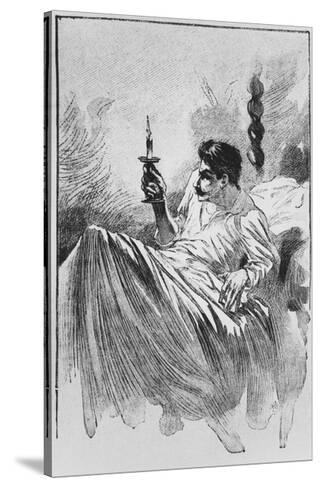
I love old timey horror, because I find most contemporary horror too intense. The 1887 Guy de Maupassant novella “Le Horla” was perfect for me– important and influential (it gave H.P. Lovecraft ideas for Chthulu), not too scary, and accessible to intermediate french readers. Plus, someone actually yells, “Oh! quelle horreur!”
It is 30 pages, in the form of diary entries. I read it after Harry Potter book 3 and it was slow going but doable. There are maybe 5 words that are important to the plot that you need to look up, and the rest of the time you can guess which words refer to types of anxiety and which ones refer to types of trembling. I have found Maupassant’s writing too flowery in english, but in french I thought it was lovely. His habit of making elaborate descriptive lists was even helpful for learning vocabulary. When something is as enormous as a galaxy, as deafening as thunder, and as invisible as the wind, it is easy to guess the meaning of those adjectives.
Like many stories about hauntings, one way to read Le Horla is as a story about settlers and imperialists grappling with the harms of their colonial projects. Instead of the more typical scenario where an “Indian Burial Ground” produces angry ghosts in american suburbs, we watch an upper class French narrator realize he’s being enslaved or colonized by an incomprehensible alien force. He spouts some racist nonsense while grappling with his horror, but I took satisfaction in watching a european deal with the receiving end of colonization and the limits of his scientific knowledge.
Since the story is public domain, you can find the text online or order from one of those cheap public domain publishers. I liked this free audiobook of Le Horla on archive.org for listening practice, but there are many others available for free online.
Intermediate french new wave: Hiroshima mon amour

If plays are relatively easy reading projects, screenplays are even easier. TV and film are more familiar than theatre for most of us, it is easier to find movie versions of screenplays, and those movies are more likely to have subtitles. Given these advantages, I thought I’d try reading a more difficult genre of screenplay: experimental film.
Hiroshima mon amour is a film by Left Bank filmmaker Alain Resnais, with a screenplay by experimental novelist Marguerite Duras. It portrays an intimate conversation between two lovers about memory, time, and war. The film is known for using flashbacks in a jarring way, as if past memories are intruding suddenly in the present. Reading the script, with the writer’s notes and directions included, makes the different time periods quite clear.
It’s an interesting type of reading practice. The vocabulary and language is simple and the script is short, but the statements and ideas are abstract and strange, with complicated emotions. I enjoyed it, with my limited french language skills and my better-developed thinking and feeling skills.
There is a beautiful Criterion edition of the film, if you want to see the finished work (and practice listening).
Two quick language learning tips
I was having so much fun improving my french that I decided to start learning spanish as well. So now I have new tips, that are unrelated to flashcards!
- It is hard to find compelling things to read when you are a total beginner in a language. May I suggest kids joke books? They are available for very low reading levels and deciphering the jokes is a fun (and funny) challenge. Short jokes contain ideal groups of vocabulary for learning, too– common words that are memorably related but don’t sound the same or have similar meanings. E.g., What animal has the smallest appetite? A moth, because it only eats holes!
- Apparently I am not the only language learner who felt a sort of plateau at the upper-intermediate level. For me, this has been partly due to the experience of being able to understand adult french content like newspapers or mystery movies, but finding it a lot more work than understanding english. The slowness and mental effort can get frustrating, which is demotivational. It turns out that trying to learn spanish made french feel suddenly much more fun by comparison, and made me much more enthusiastic and brave about french. So my suggestion is: consider turning your “weaker” language into your “second best” language by learning little bit of a third one.
Intermediate french absurdist theatre: La Cantatrice Chauve

Here’s a tip I got from my bookworm partner: reading a play is an easy win. Plays are much shorter in terms of word count than novels, yet for some reason reading a play feels like a big accomplishment.
This is especially true of La Cantatrice Chauve by Eugène Ionesco, which is both one of the most performed plays in France and entirely composed of parodies of the texts from Assimil brand language lessons. It’s as if it was invented to help beginner french readers feel like they are making progress.
This play is also straight-up hilarious, to the point that I was obnoxious to be around while reading it. Comedy is famously hard to translate, so reading the jokes in their original form felt like a great use for a second language.
La Cantatrice Chauve is a major work of theatre of the absurd, so odds are good your library will have or be able to get a copy for you. There are multiple productions of the play on YouTube that could make for good for listening practice, although I haven’t found a particularly excellent video yet.
Intermediate postcolonial francophone lit: Une Si Longue Lettre
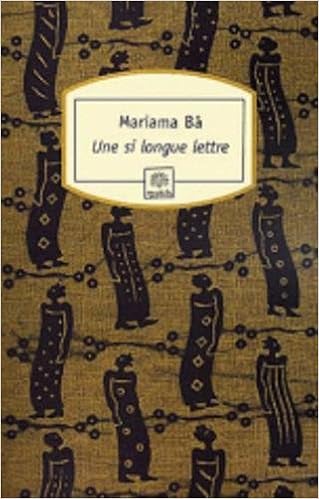
Shopping for french books led me to do something I’ve never done before: browse books by category on Amazon. This is how I learned that littérature francaise (from France) and littérature francophone (from the french-speaking former colonies) are sometimes treated as distinct literary categories. That is a stereotypically French thing to do, right? On the one hand, having enough pretension to consider French Literature as a world cultural treasure that needs to be distinguished from “literature in french”, and on the other hand having no shame about colonial racism. In any case, I found the categories helpful since one of my goals was to read literature in french from authors outside of France, but I didn’t know the special name for it.
Being only an intermediate reader, I started with Une Si Longue Lettre by Mariama Bâ. The english translation gets assigned in grade eight classes. I read it after getting through book 5 of Harry Potter (L’Ordre du Phénix), and I think I could have handled it after book 4.
Some things that make this an accessible read: it is a short book (165 pages, counting generously); each chapter is only a few pages and has a distinct topic, so you don’t have to follow long passages; and the entire book is a letter from a woman to her friend, so it uses mostly everyday language. Since the book is popular in classrooms there are lots of resources available online, including a DIY audiobook on youtube if you want to work on your listening skills.
I loved it. The narrator is a new widow living in Dakar, Senegal, writing to her friend to process her feelings and memories while she is housebound for the mourning period. She reflects on the post-independence generation in Senegal, the education and political rights of women, problems in her marriage and those of her friends, her relationships with her kids, how class and ethnicity work and how they are changing, and all sorts of interesting things. All of the social commentary comes up naturally during dishy gossip– the best possible format for a book?
Intermediate french queer graphic novel: Le Bleu Est Une Couleur Chaude

I felt like a genius when I got this out of the library. What better way to practice reading in french than a picture book? That is mostly true, although I was surprised by how difficult I found the hand-lettering (and cursive!).
This story leaves me pretty meh– the pointless tragic ending, the characters who are probably intended to be relatable but to me just seem generic (at one point they discuss both loving “that book” but don’t say what it is), and the unhealthy tale of a high school kid falling in lifelong love with the only lesbian she’s ever met.
However, it’s a great beginner-intermediate french reading project. It is short, easy to follow because of the pictures, and full of things I wanted to learn, like dialog, slang, sex words, and queer activism vocabulary. You could follow it up by watching the movie in french with french subtitles, for listening practice.
As a difficulty reference, I tackled this before any Harry Potter books, using only the power of childhood fluency that I had neglected for 25 years, and a translation app.
Weird and fabulous intermediate french reading

As an adult trying to revive my rusty childhood french, I have struggled to find compelling reading projects. Most lists of intermediate french reading for adults cover Le Petit Prince, Harry Potter in translation, and then a bunch of bestsellers that I’m not very interested in. I hunted hard to find queer content, postcolonial literature, diverse authors, and weirdo art that was suitable for a learner like me (starting from approximately fifth grade reading level). I thought I’d post small book reviews here in case it helps someone else. I know a lot of people with half-assed french skills– you can probably read more cool books than you’d expect!
You can use the “keep intermediate french weird” tag to see all my posts about this.
* * *
For starters, I have to agree that Harry Potter is a great beginner/intermediate reading project. The series starts at about a sixth grade reading level and gradually increases in difficulty, and reading the series in french I noticed that each book deliberately teaches you a few new vocabulary words.
Because the books are so popular, there is a lot of stuff available. There are good french dubs for all the movies, and the whole series is available as french audiobooks complete with wacky character voices that make for reasonably challenging listening. Google translate even knows all the creature names.
The only initial hurdle is that the books are narrated using the literary passé simple verb tense, which I had never encountered before. I made flashcards for the être and avoir conjugations and then muddled through the rest.
For adults, the Harry Potter reading experience might be superior in a foreign language. I think it is worth a try even if you haven’t enjoyed Harry Potter in english. I was in university when the books were first published, so I didn’t get caught by Pottermania and only read the series much later, at which point I found the kid-friendly plots predictable and dull. Reading them in french, my comprehension is diminished enough that I missed a lot of clues and foreshadowing, so I found the stories much more surprising and exciting!
Finally, the top reason to read Harry Potter in another language is to see how the translator handles the invented words. Muggles, golden snitches, nifflers, Slytherins… It’s a fun translation problem to witness. No matter how many clunkers got through, I will always respect the translator for turning Hufflepuff into Poufsouffle.