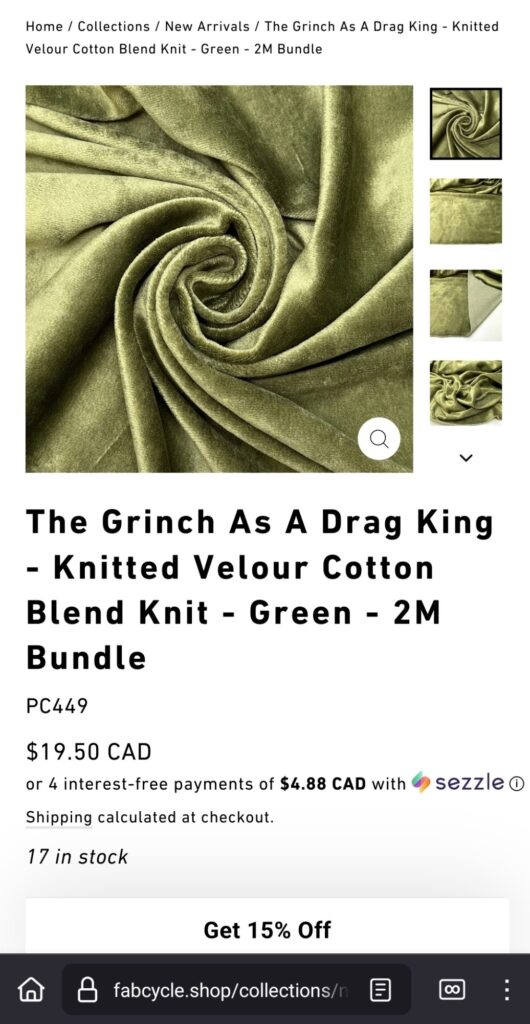
Every time Fabcycle has a fabric drop I read the listings like a novel.
Like, it’s great that they sell diverted landfill waste and deadstock and it’s great that their fabric descriptions and photos are super accurate, but I am mostly on their mailing list for the fabric names.
I bought this in about 2005 from an artist who I think had been living in Hong Kong during SARS aka SARS-CoV-1. I wish I could remember his name.
This piece is so muted and only postcard-sized. It was insignificant in my home for 15 years, and now it pops out to every (tested or masked or quarantined) visitor.
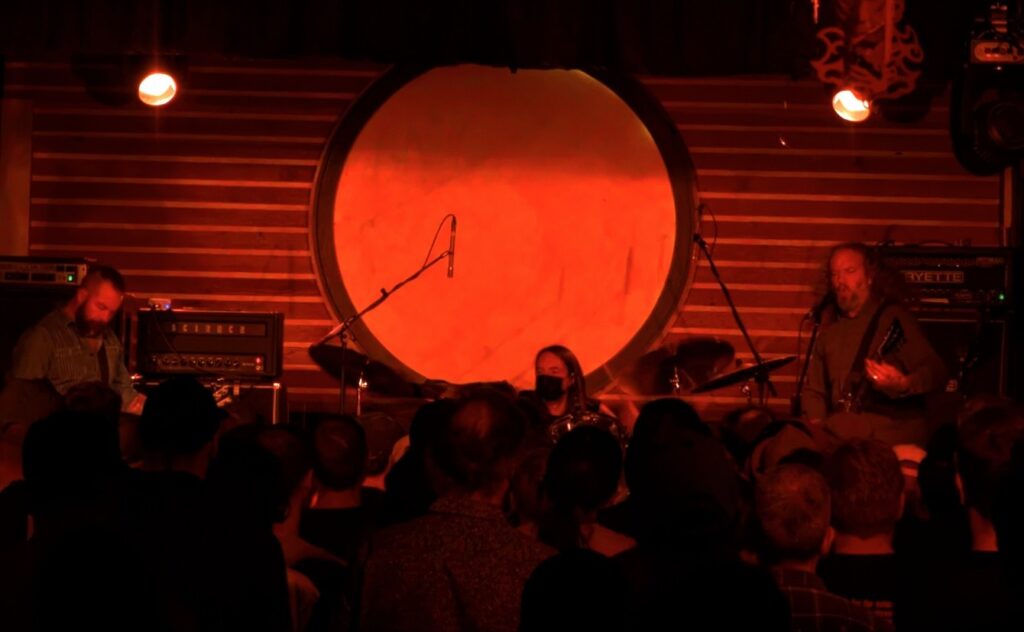
Shout out to the drummer from Sumac for performing in a mask the other night. And shout out to Vancouver Jazz Fest for having an early show with a bit of seating so this Long Covid / ME/CFS spoonie could attend some nightlife (in a respirator).
(Not perfect– stairs-only access! But I appreciated that they marked that info on the ad at least.)
I heard one of my favourite bird songs in Coquitlam last night (kʷikʷəƛ̓əm territory), a loopy upward spiral song belonging to the Swainson’s Thrush.
They were singing in a tree in a friend’s yard where my kiddo had been picking salmonberries.
Just like this:
I realized I hadn’t thought about the Swainson’s Thrush since I learned about the idea of using bird names for birds so I went looking for non-eponym common names.
Some Wikipedia editor loves that bird song as much as I do, because after Olive-Backed Thrush they listed Reverbius Maximus Harmonius.
I realized even harder, that since the last time I heard Swainson’s Thrushes singing I had read the excellent book Held By The Land, by Sḵwx̱wú7mesh herbalist Leigh Joseph.
She mentions a story about the thrushes singing to make the salmonberries ripen, and I remember that reading that made me yelp in delight because even I, who have picked salmonberries maybe three times, associate those bird songs and those berries.
I re-read that page of Held By The Land just now, and she gives another name for the Swainson’s Thrush: Salmonberry Birds. I think I’ll go with that for my #BirdNamesForBirds.
Identifying my yard bumblebees continues with these very fast-moving and hard to photograph garden friends. I think this is Bombus vosnesenkii, the yellow-faced bumblebee.
The usual joke about bumblebees is that they meander slowly and bump into things. You know, bumble it up. But these seem to be what a peak performing bee physique looks like. Fast, precise, extensive pollination going on in my sage plant.
More yard bumblebees … I started noticing them while doing an herbalism practice of visiting the same plants often to see what changed. Turns out different plants have different bumblebees (of course). These ones love the sage.
My best guess is Bombus flavifrons, the yellow-fronted bumblebee, but I’m going to try to hit up the BC Native Bee monthly zoom to get a more solid ID.
Update: several bee nerds agree this is more likely Bombus californicus. Related update: the BC Native Bee monthly study group is a lot of fun.
I have an energy impairment so i am always on the lookout for chill, seated projects you can do in brief sessions. Lately I’ve been trying to identify my various yard bumblebees .
I think this one is Bombus mixtus, the fuzzy-horned bumblebee. Their butt stripes go yellow-black-orange, they seem to be passionate about pollinating raspberries, and last year they nested under our compost heap.
These Bee ID Cards from the BC Native Bee Society have been the most helpful bumblebee field guides so far. I *love* focused guides for small regions, rather than wading through an encyclopedia of North American Insects.
I’m also very into these bee bingo cards from the BC Native Bee Society, because they have a separate card for wannabees. Yes! I wish all field guides included lookalike info.