This was my first time trying a cover crop for weed suppression in the garden, and I think it’s been a success!
My lazy method was to let some volunteer grass grow tall here over the winter and strim it when it had green seeds, around the end of March. Then I covered it with a tarp until it was time to plant beans in mid May. This spot previously had frequent mullein, herb robert, and grasses.
There are a few things coming up through the mulch, which I pulled after taking this, but way fewer weeds than in the parts of the garden that got mulched with compost.
I’ve been researching different ways of coping with weeds, especially around annual veggies, trying to find something more sustainable for my energy impairment / dynamic disability / chronic illness situation.
I got a lot out of the various videos by No-Till Growers on cover crops, mulch, etc. They have a book too, that my library had.
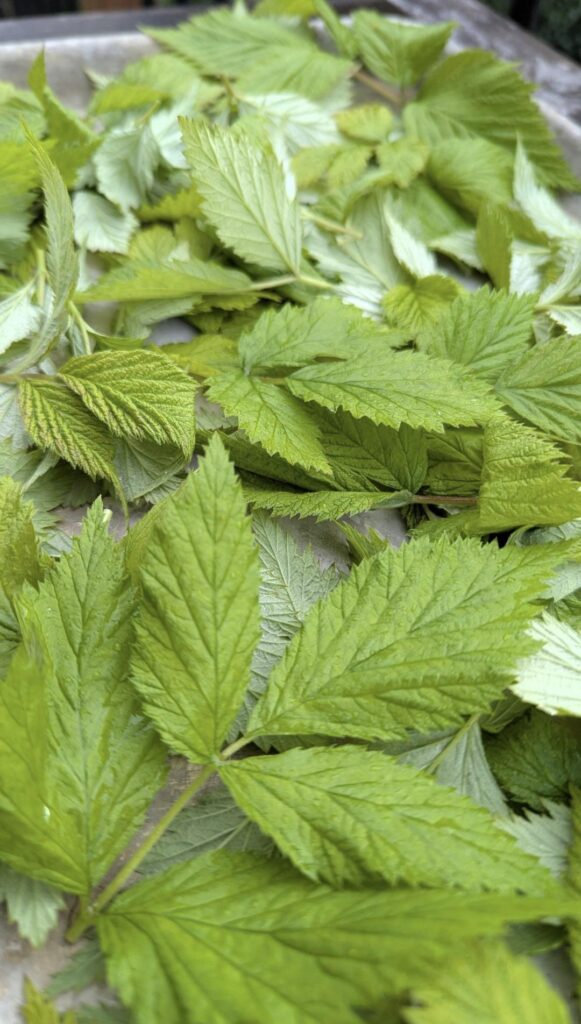
Part of growing raspberries is having raspberry suckers pop up everywhere. Why did it take me until today to realize I could harvest leaves for tea while weeding raspberries out of the paths, lettuce, peas, asparagus, potato bed…?
People, i am haunted by the desire to compost together a whole turkey carcass and a whole Christmas tree.
I don’t know a lot about bugs but I count it as a win when I see a new native insect in my garden, especially a predator. I think this is Dolichovespula maculata, who goes by many names but the coolest one is blackjacket.
Our yard was all lawn when we moved here a couple years ago, and eerily devoid of bugs. I am feeling emotional that there are apparently enough flies and caterpillars now to support this terrifying new friend 😭
My very first harvest of lemon verbena (Aloysia citrodora) is somehow ready to dry. I only rescued this friend from the discount section at Canadian Tire a couple of weeks ago and haven’t gotten around to repotting it, but it managed to transform from straggly to lush and fluffy anyway. On brand somehow– a plant with very happy vibes.
Identifying my yard bumblebees continues with these very fast-moving and hard to photograph garden friends. I think this is Bombus vosnesenkii, the yellow-faced bumblebee.
The usual joke about bumblebees is that they meander slowly and bump into things. You know, bumble it up. But these seem to be what a peak performing bee physique looks like. Fast, precise, extensive pollination going on in my sage plant.
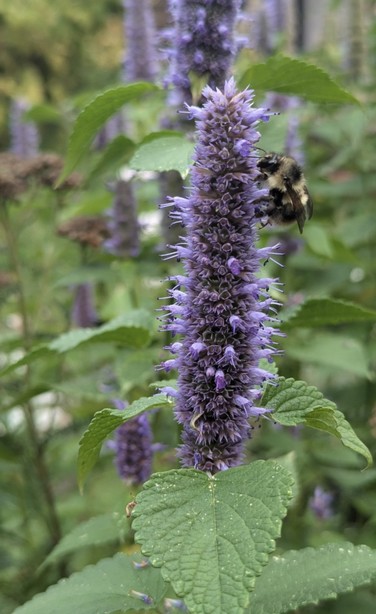
More yard bumblebees … I started noticing them while doing an herbalism practice of visiting the same plants often to see what changed. Turns out different plants have different bumblebees (of course). These ones love the sage.
My best guess is Bombus flavifrons, the yellow-fronted bumblebee, but I’m going to try to hit up the BC Native Bee monthly zoom to get a more solid ID.
Update: several bee nerds agree this is more likely Bombus californicus. Related update: the BC Native Bee monthly study group is a lot of fun.
I have an energy impairment so i am always on the lookout for chill, seated projects you can do in brief sessions. Lately I’ve been trying to identify my various yard bumblebees .
I think this one is Bombus mixtus, the fuzzy-horned bumblebee. Their butt stripes go yellow-black-orange, they seem to be passionate about pollinating raspberries, and last year they nested under our compost heap.
These Bee ID Cards from the BC Native Bee Society have been the most helpful bumblebee field guides so far. I *love* focused guides for small regions, rather than wading through an encyclopedia of North American Insects.
I’m also very into these bee bingo cards from the BC Native Bee Society, because they have a separate card for wannabees. Yes! I wish all field guides included lookalike info.
I don’t want gardening to be a reason I hate other creatures so I am trying to cultivate more positive feelings about squirrels.
Firstly, is there some reason we are so sure that when squirrels plant seeds it is an accident? This person observed that squirrels did a better job of growing trees than humans did 😂
Maybe the squirrels are right and I should convert my asparagus patch to an oak tree surrounded by peanut plants.
Having successfully sprouted native plants from seed using the very easy method in this podcast episode, I can now recommend a listen. Got me thinking about supporting local genetic diversity of each native plant species, not just a diversity of species.
Plus if you start native plants from seed you get to see their tiny baby form ❤️
This is a Nootka Rose / Rosa nutkana that sat outside in its pot all winter and popped up in March.
Sometimes it is hard to guess whether a sprout is your intended plant or a weed, but this one is recognizable even when still tiny. A little Western Red Columbine / Aquilegia formosa that sat unattended outside all winter and started slowly growing itself in February.
Yarrow started coming up in December and hasn’t stopped. It’s one of those plants that really loves life. Hopefully it will stay this happy once i transplant it into my lawn 🌱
Great Camas / Camassia lechtlinii has been making me emotional by self-seeding all over my garden after its first year of blooming, but it did come up really well in outdoor trays as well. It’s like it was meant to grow here or something.
Last baby photo for today: this is a wildflower from the prairies (not my region) that I am growing because it’s so pretty. Prairie Smoke / Geum triflorum. It was described as non-invasive here in the PNW and I would believe it– suuuuper tiny seedlings sprouted outdoors in February, but sparsely and they have been growing very slowly.
My peppers are sprouting, Aleppo peppers from seeds I saved last year. I started growing these because the plants were facing extinction due to the war in Syria. There was a push to steward the seeds for when Syrians could return to farming them. (Also the peppers are delicious.)
I remember Cheryl Bryce talking about how war and colonization doesn’t only happen to humans, it happens to the rest of the inhabitants of the land as well. That invasive species are a form of colonization. I started growing qʷɬáʔəl (kwetlal, camas) because so many people in that podcast emphasized that settlers can and should learn to propagate Indigenous plants.
It’s interesting to me that with all the complications of power dynamics and cultural appropriation, it’s so common to encourage allies to do seed keeping work. Yes, grow the seeds in your garden. Yes, save the seeds and trade them around. It isn’t only hobby gardeners who want to share seeds and cuttings and harvests. (Disclaimer that each plant has its own discussion and context.)
Now that it is seed starting season in the northern hemisphere, I wonder who is growing Palestinian plants, to keep the seeds for when Palestinians can grow them again. This episode of Seeds and Their People from a few years ago is an interview with a Palestinian seed keeper in Philadelphia, growing molokhia (jute), kusa (a summer squash), and zaatar (a savoury herb), and it includes links to buy seeds from the True Love Seeds network of small farmers.
I’m posting these little camas babies for #MillionsMissingFlowers , a monthly chance to talk about ME/CFS.
This month I am thinking about how long it takes to get an ME diagnosis, 5+ years or more on average. ME is already listed as a common (5%+) outcome of covid infections, and we’re just finishing year four. I wonder how many people will realize this year that they got ME from covid in 2020. I wonder about Omicron in 2022.
I really appreciated Bea in this episode of Death Panel, talking about the process of self-diagnosing before deciding to see a doctor.
She spent a year thinking she was just reading too much, before realizing she was going blind. Different conditions, but that’s so familiar to me– I spent a year thinking I was just sleep deprived or stressed before realizing I had cognitive and energy impairments.