Poking around at Sean Dorsey’s latest work (re:) and his upcoming shows are “KN95s provided & required”, along with many other accessibility practices like ASL interpretation, wheelchair access, detailed info about stairs, all-gender bathrooms, public transit access, and not requiring ID to pick up tickets. Love.
Tag: covid
Just add DJ
During this whole pandemic I have been pondering how to have satisfying social events that are not centered around food and drinks, which was my usual in the before times.
New experiment today was having a friend do a masked dj set in the kitchen during a craft party. 10/10 recommend craft rave.
What counts as lucky in a polycrisis
Reading up on aftercare for chemical weapons exposure and I can’t decide how to feel about the way it overlaps my existing practices for wildfire smoke season… Take the win, I guess.
It really is a relief when the necessary defenses to different aspects of the polycrisis are not in conflict. I remember dealing with wildfires and a heatwave during early covid lockdowns in 2020. Back then before the PNW heat dome, hardly anyone had a/c so we needed to open the windows to deal with heat, but we needed to keep them closed to keep the smoke out. We couldn’t socialize indoors due to covid and couldn’t socialize outdoors due to smoke.
The Beaverton spoke to my heart:
“Marginalized communities are often hit hardest by situations like this,” says Cablebill, “because they do not have easy access to resources that would enable them to be neither in nor outside.”
nbd
Just Car Seat Headrest performing on KEXP with singer Will Toledo in a respirator ❤️
I want to send this to everyone who has ever said, “Can you take your mask off so people can hear you?”
What a treat to hear a host on my fave herbal medicine podcast encouraging people to wear masks to protests to protect against covid and long covid. Lots of other good protest safety tips in here, plus some herbal ideas for street medics.
Quirks and Quarks for Long Covid Awareness Day
Huge shout out to Bob McDonald for asking David Putrino all the good naive questions about covid on mainstream public radio. Starts at 19:30 or scroll down to that section.
Quirks & Quarks Mar 15: The silent, long-term effects of COVID, and more…
“Wow is that nervous system damage permanent?”
“What is special about covid that allows it to spread through the body, when we think of it infecting the lungs?”
“If covid has the ability to suppress the immune system, how does that affect our ability to fight off other pathogens?”
“What about people who think since they are living a healthy lifestyle, covid isn’t really a worry for them?”
“How far do you think this might go towards explaining the huge spike in excess deaths?”
And the biggie:
“What should we do with all this information, now that most people think the threat of covid is gone?”
I’m pretty into this framing of “new information about silent health damage from every covid infection”, even though it is not new or very silent. I hope it helps some covid deniers rejoin the evidence-based world. Nice one, Quirks and Quarks.
Ah, gaps
The “Persistent Gaps” section of this new 🇨🇦 report on long covid is killing me.
Definitions and clinical guidance, sub-populations (how different groups are impacted), care and treatment, pathogenesis (underlying biological mechanisms and causes), socio-economic impact, and prevention. That’s… the whole thing. Long covid is one big gap. Laugh/cry.
I am happy to see they at least mentioned prevention this time. The previous reports that detailed how long covid was common, disabling, and permanent but somehow inevitable filled me with so much rage.
The new “recommended priority action” to “incentivize investment in improving indoor air quality in buildings where large numbers of people gather” is belated but good!
Last year’s teacher made sure our giant hepa filter got set up properly in this year’s new classroom without me even asking. This should not be necessary but under the circumstances it is such a relief to have an accomplice.
More inadvertent pandemic art

I bought this in about 2005 from an artist who I think had been living in Hong Kong during SARS aka SARS-CoV-1. I wish I could remember his name.
This piece is so muted and only postcard-sized. It was insignificant in my home for 15 years, and now it pops out to every (tested or masked or quarantined) visitor.
Always a happy sight
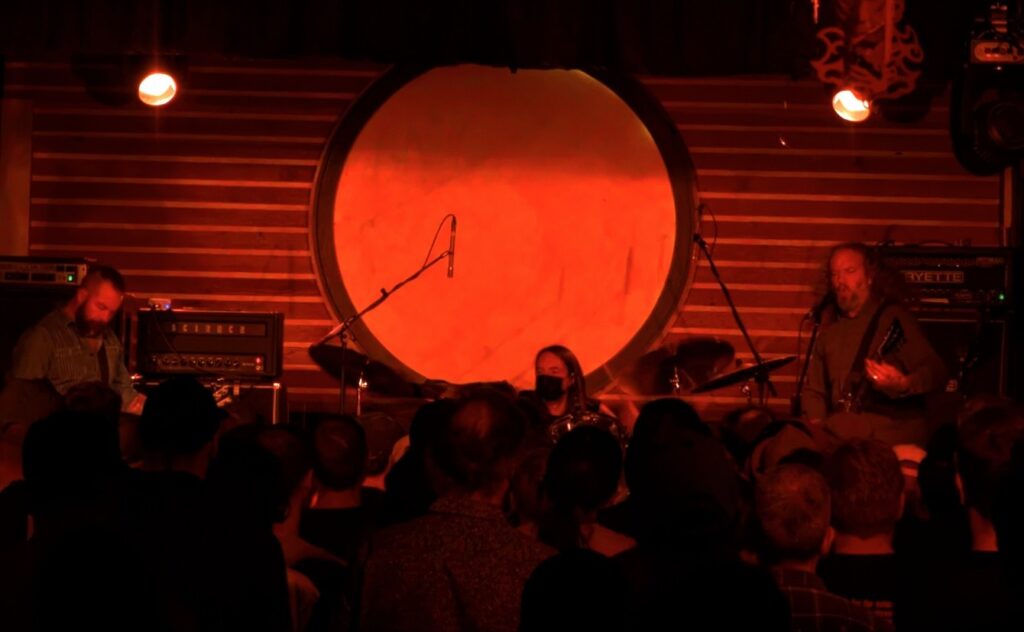
Shout out to the drummer from Sumac for performing in a mask the other night. And shout out to Vancouver Jazz Fest for having an early show with a bit of seating so this Long Covid / ME/CFS spoonie could attend some nightlife (in a respirator).
(Not perfect– stairs-only access! But I appreciated that they marked that info on the ad at least.)
Accidental pandemic art
This has been hanging on my wall since at least 2012… Staying tender under these particular apocalyptic conditions used to be just a cute proposal, but I think it actually was helpful to prepare an emotional stance ahead of time 🤷🏻

A way to survive…
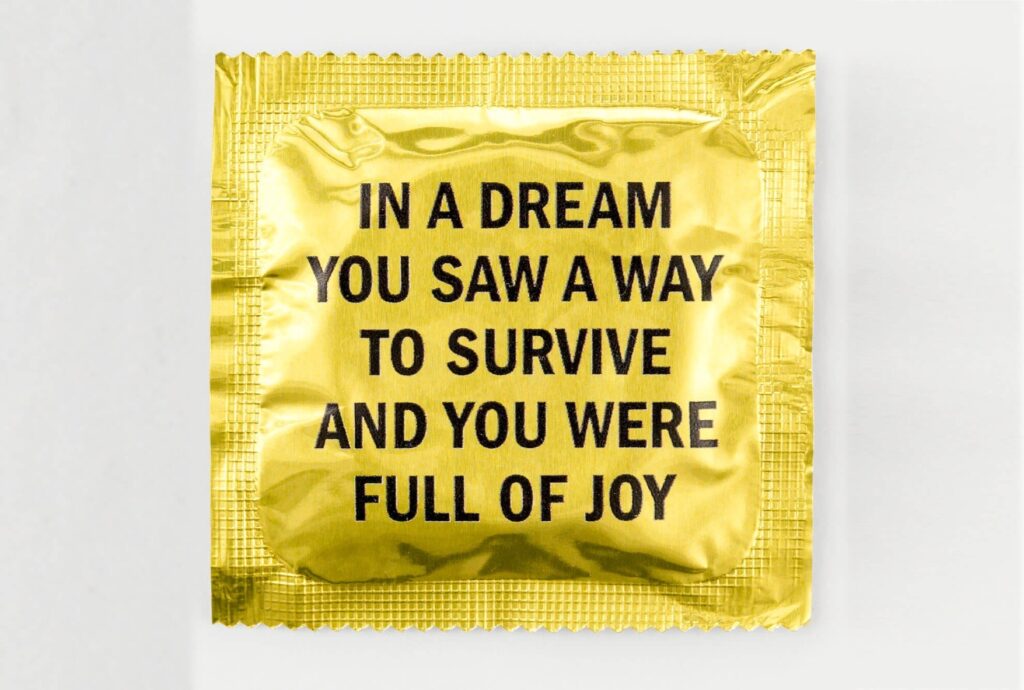
Can someone please put this iconic Jenny Holzer text on an n95 and sell it to me? Thanks
An old practice from AIDS movements that I think we should try out for this pandemic: at the beginning of events, inviting audiences to call out the names of people who aren’t here because of the virus. Covid deaths, long covid, people sick today, immuno-inaccessible events, caregivers, etc. It’s so hidden, people think they don’t know anyone despite the huge numbers.
On what patients know
How patient-led research could speed up medical innovation, with examples from long covid and ME/CFS, including Solve M.E., PLRC, and MEAction
Of course they mention the speed of patient-led research, but I also love to see the recognition that patients help design better experiments and especially better controls. It’s hard to control for dynamic conditions and lack of diagnostic lab tests, but patients have expertise.
Clean Air Club interview
Last thing I want to make sure to share for #LongCovidAwarenessDay is this podcast interview with Emily Dupree, the absolute legend / regular person who founded Clean Air Club and inspired dozens of similar lending library projects, providing free air filters and far-uvc lights for arts events. Her clarity about clean air and mask requirements as access issues is 👌🏻
Not just a lingering cough, but also a lingering cough
The long covid resource I have shared with the most people irl might be surprising… It’s how to stop a chronic dry cough (PDF).
I think we’re finally done with the mistaken idea that long covid is just a lingering cough. But also, often people have a lingering cough! And it can be rough– i have had PEM as a result of coughing.
So I’m sharing the method I got from my respiratory physiotherapist– of course talk to a doc first.
Long covid oracle, March 2020
Shout out to Jennifer Brea, co-founder of MEAction, who started raising awareness of long covid on March 14, 2020.

This is one of the data points that convinced me disability activists can see the past and present so clearly it counts as seeing the future.
How to realize you need to pace
I’m forever grateful to MEAction for their Stop Rest Pace campaign that started early in the pandemic. It’s the reason I stopped trying to push through my fatigue, and realized I might have long covid. Their resources on recognizing PEM and learning to pace are honestly worth a read for everyone during these times.
And the guide they made for doctors in collab with the Mayo clinic is so smart.
How to Be Sick
A book that helped me adjust to long covid life is How To Be Sick, by Toni Bernhard, who is a Buddhist with ME/CFS. It’s not a “heal yourself with meditation” book, it is a “techniques for handling suffering” book.
I had heard sick and disabled people say everyone who receives a life-changing diagnosis should be provided a doula or guide for the transition, and this book served a little bit of that for me. Passing it on.
Long Covid Awareness Day 2024
It’s heartening to see more people talking about the ever-growing long covid disaster, and also it has been getting hard to endure all the awareness raising that aims to scare people as much as possible by using my health conditions as an example.
It’s important, keep it up! But for #LongCovidAwarenessDay I want to lift up things that have made long covid easier for me to bear. Sending so much love today to fellow long haulers and to all the spoonies, especially people with ME ❤️
Millions Missing and counting…

I’m posting these little camas babies for #MillionsMissingFlowers , a monthly chance to talk about ME/CFS.
This month I am thinking about how long it takes to get an ME diagnosis, 5+ years or more on average. ME is already listed as a common (5%+) outcome of covid infections, and we’re just finishing year four. I wonder how many people will realize this year that they got ME from covid in 2020. I wonder about Omicron in 2022.
Sources:
- Conservatively, 5% of covid infections lead to ME (review in Nature)
- Time to diagnosis for ME, via #SolveME (pdf)
I really appreciated Bea in this episode of Death Panel, talking about the process of self-diagnosing before deciding to see a doctor.
She spent a year thinking she was just reading too much, before realizing she was going blind. Different conditions, but that’s so familiar to me– I spent a year thinking I was just sleep deprived or stressed before realizing I had cognitive and energy impairments.