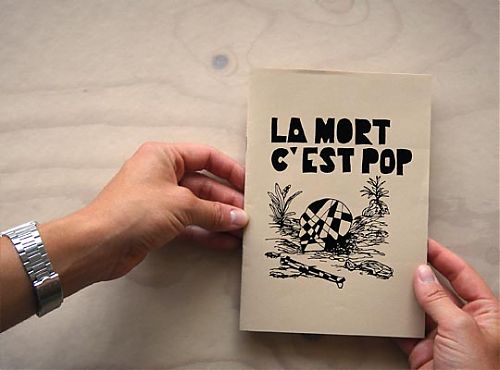

This is another old draft that has been hanging around. I think I intended to write something about pop death, and forgot what it was because it was meaningless bullshit. This is a draft from the period where I was just reblogging pretty images.
This is another old draft that has been hanging around. I think I intended to write something about pop death, and forgot what it was because it was meaningless bullshit. This is a draft from the period where I was just reblogging pretty images.
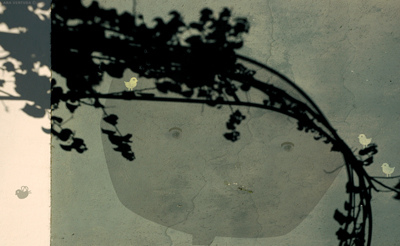
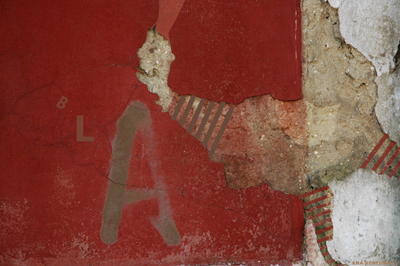


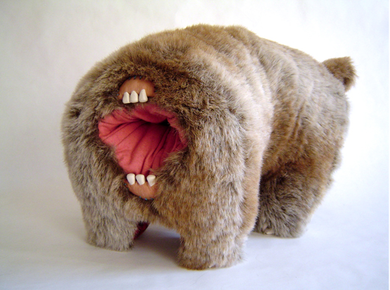
I want to build this art in my living room. It could be wired to the “Speakers B” switch on the stereo, for special occasions.

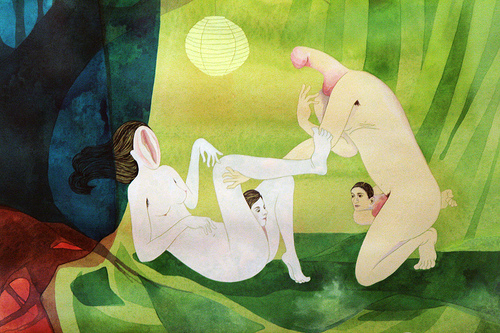
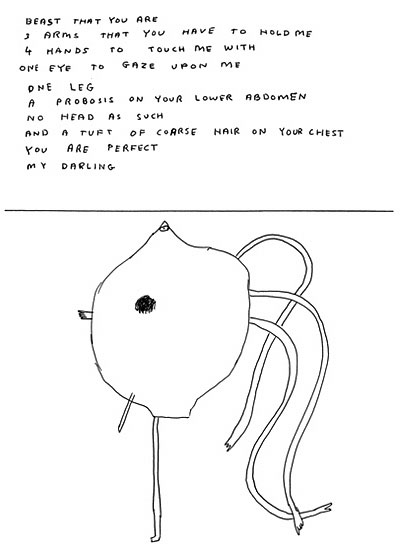
I care more about the faces-in-crotches than the genital-heads. I think it is because I imagine those people kissing with the mouths on their protruding faces and it seems irrelevant what their huge, blind, brainless heads are doing. So many more senses on your face. Disorienting.

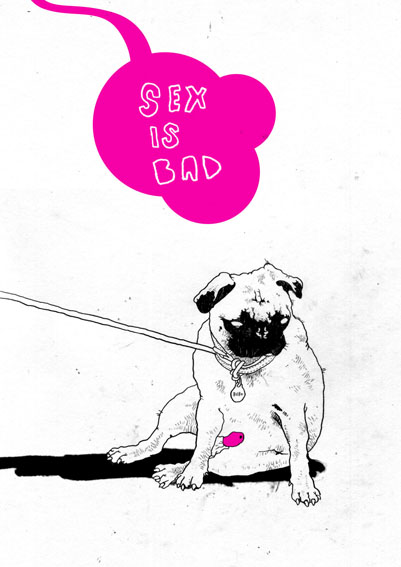
This reminds me of my favourite t-shirt.
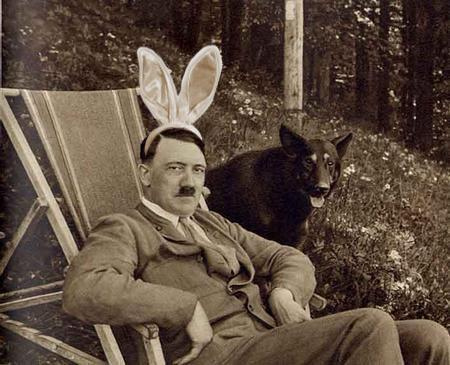
I guess that is photoshopped? I started looking at blogs in languages I don’t understand, and ended up finding a whole bunch of bunny-related images. There is nothing to understand.
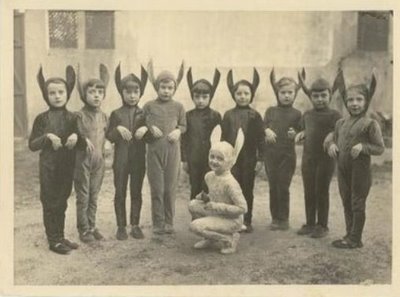
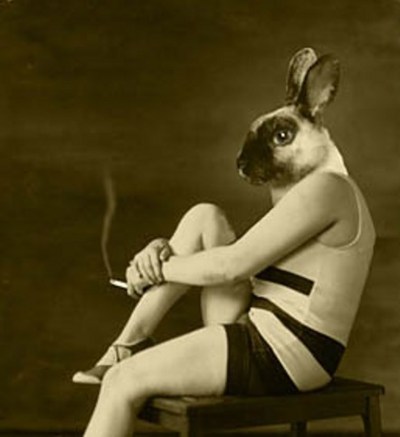
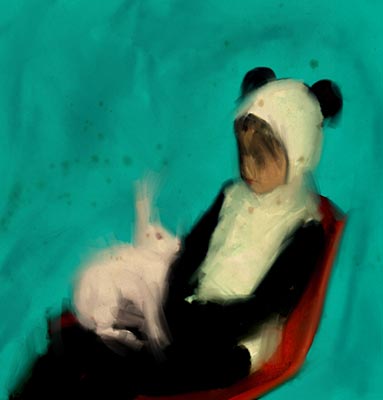
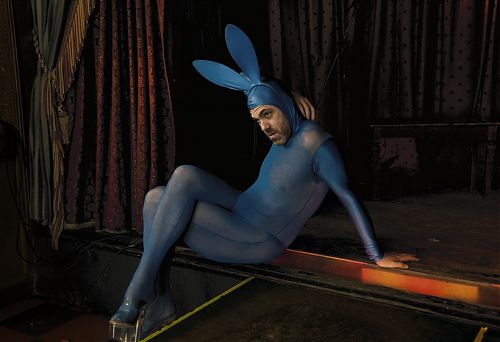


This looks violent.

This sounds like fado, and I want to add halos to every bearded image.
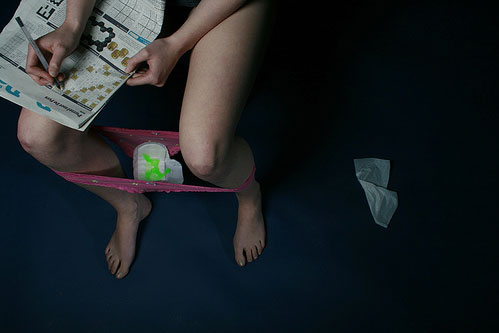
I notice I am posting things here that ordinarily I would post at All About My Vagina, because I am not happy with the design over there.
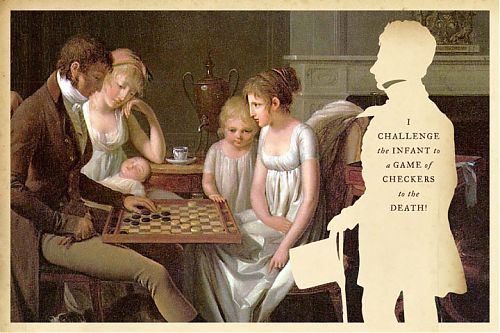
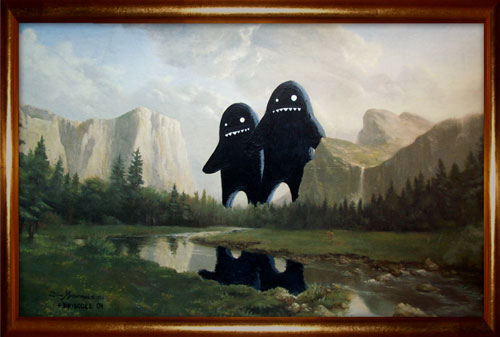
Thinking about enhancing thrifted plates reminded me of the vintage vandals shows from 2005.
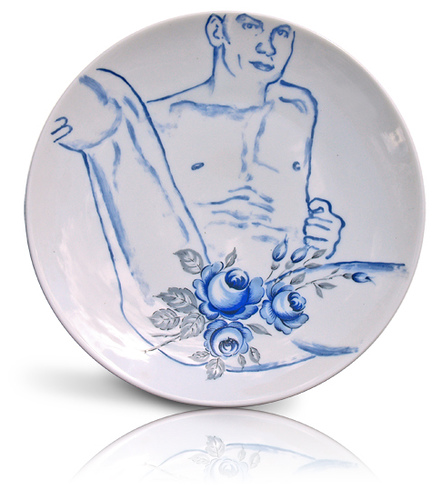
About a thousand dollars for the set of six. More importantly, this gives me all kinds of ideas for things to do with thrift store plates.
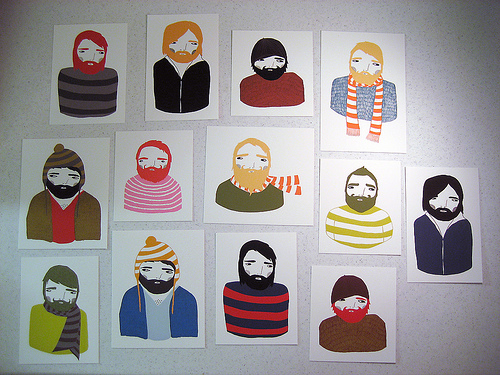
Apparently these will be for sale on Etsy. I’m filing this under “knitting” because the stripes are giving me a yarn urge.
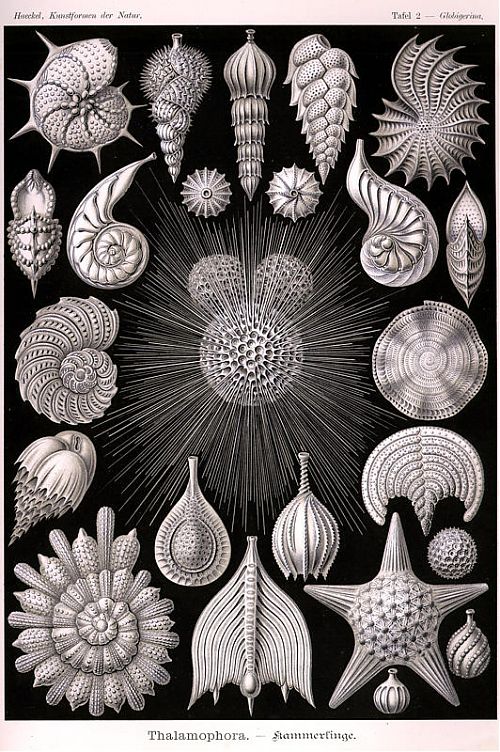
I fell into a bit of a well of naturalism and anatomy links, and ended up wanting to read Stuffed Animals and Pickled Heads: The Culture and Evolution of Natural History Museums, although I’m pretty sure it isn’t as critical or curious as I want it to be. One review quotes this tedious oversimplification as a “philosophical insight into the scientific and human impulse to categorize.”
“To have a concept… is to have its negation already in tow…. There is a class of things called ‘dog,’ and there is a class of things (quite substantial, in fact) that are ‘not-dog.’… Language and thought cannot really function without this most basic tool for carving up reality.”
Never heard of fuzzy continuums and the rewards of using them, I guess? Odd, since natural history museums are full of ambiguous specimens (two headed mutant dog, alleged dog-cow hybrid, newly discovered tentative dog, etc) that illustrate quite nicely the space between dog and not-dog. Sort of dog. Possible dog. Both dog and yet not dog. Natural history museums are pretty much ground zero for failed categorization schemes and fuzzy margins, sets that are more complicated than somebody was hoping they would be. Maybe the quote is just out of context. There are a lot of ellipses in there.
To balance out the sad saga of binary categories in science, I like to think about primary colours. These seem like a life-affirming, pro-ambiguity, scientific success. Primary colours are sets of colours that are chosen to maximize the usefulness of the spectrum between them. A noble, everybody-wins way to think about categorization, and also an easily visualized example of information organized into multiple overlapping continua. Wikipedia points out that “Any choice of primary colors is essentially arbitrary; for example, an early color photographic process, autochrome, typically used orange, green, and violet primaries.” Concrete! Maybe this is because colour science is so bluntly tied up in perception and perspective. It has to be aware of observer bias and intention, because it is about observing. My favourite bit of that Wikipedia page:
If a human and an animal both look at a natural color, they see it as natural; however, if both look at a color reproduced via primary colors, for example on a color television screen, the human may see it as matching the natural color, while the animal does not; in this sense, reproduction of color via primaries must be “tuned” to the color vision system of the observer.
I wonder how long it will be before someone makes a TV for dogs, with two kinds of pixels instead of RGB. Or TV for bees, with four kinds.
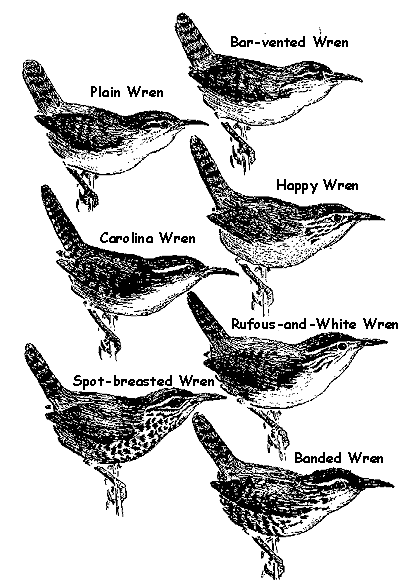
I was thinking about sets of sets when I came across this set of similar wrens, discussing the collections of identifying marks that make up a distinguishable bird species.
The same site has a lovely little discussion of preparing the mind to see birds.
Experts say that when we lose something, before we begin our search to find the lost thing we should picture the object in our minds. This kind of “visualization” causes the brain to do something wonderful. On the one hand, it appears to filter out many unnecessary sightings but, on the other, if something even remotely resembling the lost object comes into view, the mind seems to “jump” at it.
Power of pattern matching.

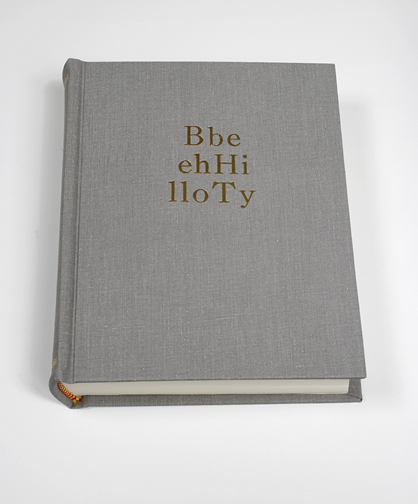
Repetition with variation along two dimensions: different Rs, warped to different degrees.

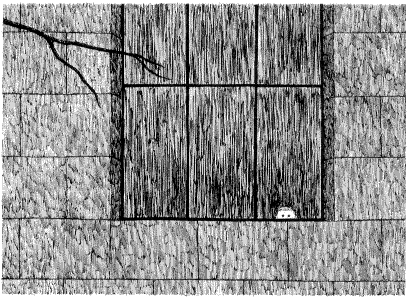

I had never thought of the Gashleycrumb Tinies as a memento mori, just a funny bit of kids’ horror, until somebody posted them all under the heading Ars Moriendi.