Tag: ranting and politics
Look good naked, bring your own analysis, a lot of video links.
A bloggy friend of Erin’s posted about a TV show called How To Look Good Naked. I don’t have cable, and I didn’t know anything about this show. This blogger, Sarah, said the show basically relied on body image coaching to help women like their nude bodies, with no weight loss or surgery suggestions at all. I found this improbably thrilling news regarding a reality makeover show, so I looked it up on YouTube. This is from the American version (the original is British).
They just pointed out that plastic surgery doesn’t work? On TV? And they used their feelings to decide how to solve their personal distress? Yay hooray! The clips I found raise a ton problems for me, but wow, I am really happy to see this conversation happening on a mainstream makeover show.
Problems/boring parts:
- That blond mom clearly spends a lot of time grooming and performing “being pretty.”
- The show stars a man as the expert despite being about women’s body image.
- It’s safe to have this man see you in your underwear because he’s gay, but I don’t see anyone pointing out how that makes straight men’s expected behaviour quite obviously problematic. (Also in that clip, host Carsen casually equates strippers and low-class names, managing to bash both at once. There are other ways to make that joke, sir.)
- It focusses on a lot of external validation (mirrors, man host’s perspective, other people’s compliments).
- The show values looking conventionally femme and ‘sexy’ over feeling comfortable (external validation again).
- They have a half-assed acceptance of fat (don’t hide your fat… because that will make you look fatter).
- It demonstrates the conventionally feminine ambigious ‘no’ (giggle giggle smile) and seems to believe that coerced nudity is ok if one person really thinks it’s for the best.
- Obviously the producers just realized that “real beauty” will attract a valuable target demographic (thanks for that, Dove).
- Based only on these clips, they don’t seem to point out that your body has any endearing qualities besides the way it looks.
- The host looks like he’s had some work done himself.
And yet, I am still definitely pleased to see a rounded woman’s butt cellulite on screen in a positive context, hear someone make the basic point that clothes need to fit your body and not vice versa, and even see men touching each other fairly comfortably.
This is a very narrow discussion of body image, but it is at least in a direction that I value: unpacking all the crap that people said you should do and deciding for yourself. (My body and I are totally bff almost all the time anyway, so I’m not disappointed about the lack of new ground.)
It’s quite the comment on the state of TV that eliminating weight loss and surgery without discussing anything else is cause for celebration, but maybe these baby steps will make some room for a similar show that adds a couple of elements, and then a couple more. No weight loss, no surgery, and no dissing fat. Or getting to know your body without looking at it. Queer eye for the straight girl, finally, or a show where women come up with ways to enjoy their bodies without a host/star/authority at all. I dream.
Ernst Haeckel, categorization, sets of sets, primary colours, dog tv
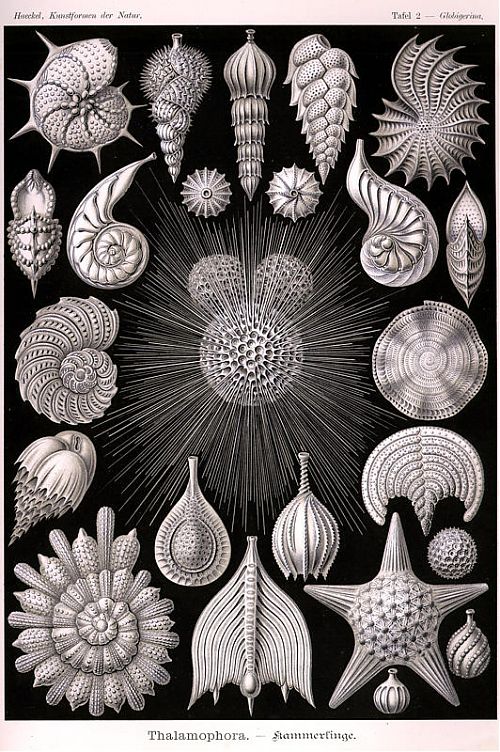
I fell into a bit of a well of naturalism and anatomy links, and ended up wanting to read Stuffed Animals and Pickled Heads: The Culture and Evolution of Natural History Museums, although I’m pretty sure it isn’t as critical or curious as I want it to be. One review quotes this tedious oversimplification as a “philosophical insight into the scientific and human impulse to categorize.”
“To have a concept… is to have its negation already in tow…. There is a class of things called ‘dog,’ and there is a class of things (quite substantial, in fact) that are ‘not-dog.’… Language and thought cannot really function without this most basic tool for carving up reality.”
Never heard of fuzzy continuums and the rewards of using them, I guess? Odd, since natural history museums are full of ambiguous specimens (two headed mutant dog, alleged dog-cow hybrid, newly discovered tentative dog, etc) that illustrate quite nicely the space between dog and not-dog. Sort of dog. Possible dog. Both dog and yet not dog. Natural history museums are pretty much ground zero for failed categorization schemes and fuzzy margins, sets that are more complicated than somebody was hoping they would be. Maybe the quote is just out of context. There are a lot of ellipses in there.
To balance out the sad saga of binary categories in science, I like to think about primary colours. These seem like a life-affirming, pro-ambiguity, scientific success. Primary colours are sets of colours that are chosen to maximize the usefulness of the spectrum between them. A noble, everybody-wins way to think about categorization, and also an easily visualized example of information organized into multiple overlapping continua. Wikipedia points out that “Any choice of primary colors is essentially arbitrary; for example, an early color photographic process, autochrome, typically used orange, green, and violet primaries.” Concrete! Maybe this is because colour science is so bluntly tied up in perception and perspective. It has to be aware of observer bias and intention, because it is about observing. My favourite bit of that Wikipedia page:
If a human and an animal both look at a natural color, they see it as natural; however, if both look at a color reproduced via primary colors, for example on a color television screen, the human may see it as matching the natural color, while the animal does not; in this sense, reproduction of color via primaries must be “tuned” to the color vision system of the observer.
I wonder how long it will be before someone makes a TV for dogs, with two kinds of pixels instead of RGB. Or TV for bees, with four kinds.
Crap emails, man angst, better living through feminism…
I try to be calm and cool…… but my body language always gives me away & creeps women out some how. I start conversations easily, but I find myself saying too much or confusing women by saying things that they cannot understand or are too deep, for the amount of Vodka-Red Bulls that they have consumed.
This post at Letters From Johns reminds me of this (much longer and funnier) Crap Email From A Dude. They both remind me of crap emails I’ve received in the past from various acquaintances and from strangers who read about my vagina.
It’s weird to recognize a whole collection of traits— the insistence that they like women even though they are unable to avoid venting their anger at/about women, the over-analysis often constructed from one chapter of [dead guy of your choice], the obsession with yet lack of self-awareness (“I’m very direct, here’s 3000 words about nothing.”), the refusal of independent responsibility (“I hate it when people hang out with me even though they obviously think they’re too good for me.”), the fucked up gender stereotypes, the obsession with yet discomfort over sex… It’s a whole syndrome. In high school, my friends and I called these characters Deep Teen Smurf, or Bad Teenaged Poet.
Off and on, I’ve wished for a book to recommend to these guys, to help them snap out of it and get past being so angry and hurt about their entitlement not working out for them. I would call this book “Put On Your Big Boy Pants, OK Thanks.” I’ve seen The Gender Knot recommended as a book that explains how patriarchy even causes problems for men (while distinguishing those problems from the problems of being oppressed). So maybe that would work. It’s on my excessively long personal reading list for 2008, to find out.
Curling, graininess suitably expressing surreality.
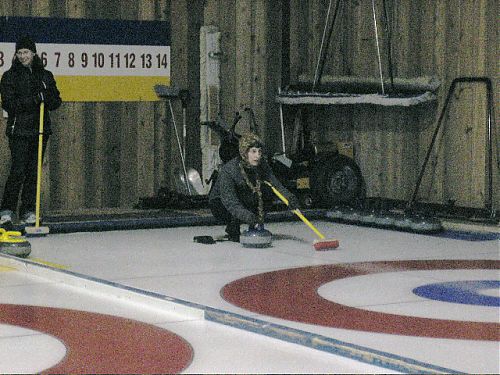
I went curling after hours at a rink owned by some friends of my cousin, out near Sidney.
- It was surprisingly fun, in the way that bocci, billiards and croquet are fun. Minimally-confrontational exercises in physics.
- So far I’ve never once been a fan of flattening large areas of land (parking lots, malls, golf courses…), especially land where I understand something about it having been colonized and occupied. It’s extra absurd when the flattening is done for sports. Non-cooperation overload.
- If I were actually into playing sports, I would set up a beautiful place to play for once. Rinks, fields, courses and courts are all so ugly! Wow. I wonder if spending time in artificially lit, flattened out, weirdly-proportioned, echo-y, energy sinkhole type spaces might be damaging on its own, even without the formalized competition and violence and the addiction to contrived adrenaline rushes. (Hi, I have fun ideas about sports!) Certainly people say that about office cubicles, that the ugliness is demoralizing, even without the bureaucratic hierarchy crap.
- And, curling was really fun. Pushing heavy things across ice with measurement marks is basically sensory play. Balance, momentum, angles, stretching, muscles. I bet curling kink parties would be fun.
Excessive red and blue in my kitchen, being impressive, calendar trivia…
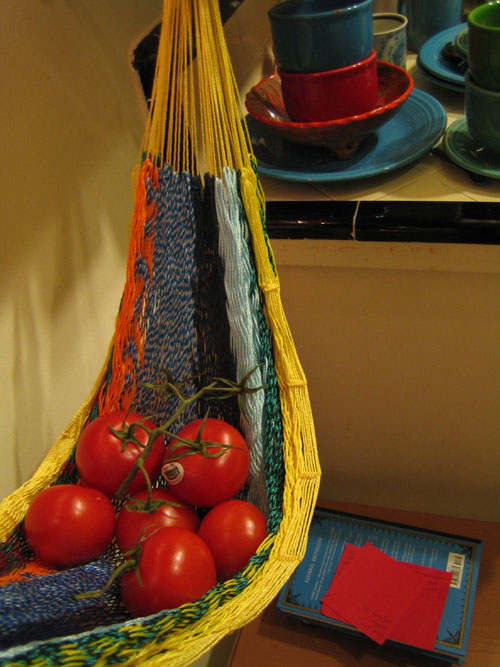
For a moment I was feeling disappointed that I hadn’t come up with any simple theme for the photos I’ve been posting this week. (I don’t know if anyone even noticed them, but the matching sets of red and blue and crafty ideas and so on were making me more comfortable.) I got to thinking about the ways I use gimmicks like that whenever I make things, as a way to add automatic value to whatever I produce. Obvious extra effort. If nothing else, the project will look like a lot of work, which is impressive in certain ways, by default. I’m trying to stop doing that automatically and cut to the chase more. Be more honest instead of more impressive. Probably every adult thinks about this at least a little bit, in some context. I thought I was doing alright with this personal growth project, but then at a festive feast with my extended family, a cousin’s friend commented that I seemed well read. That’s probably my number one trying-to-impress-you habit, being smart. It’s complicated, because I do like to learn things and I do like to share what I find out and not hoard it, but if I want to be your friend I will almost surely start telling you a lot of fanciful trivia related by a larger theme instead of, for example, asking you to tell me about things you seem to know that I don’t. Reading about DIY education is helping me work on this. It makes nonconsensual teaching really, really embarrassing.
So. As my early morning mind-map hopefully explains, I was all set to embrace the non-patterned nature of my really low-effort holiday posts. Then I got to thinking about how much I love the way the last week of the calendar year can get divorced from daily reality and kind of out of time. Students and lots of workers are on holiday from their regular schedules, you never know when shops are going to be open, many households have visitors or go visiting, a lot of people eat really strangely… Regular patterns don’t hold. It reminds me of an ancient Roman intercalary festival that I can’t remember the name of. So now of course, that’s my theme for this week’s little photos. Intercalary disorder. I think this sort of doubly violates my goal of not acting so impressive.
Old men knitting, a gap, then young men knitting
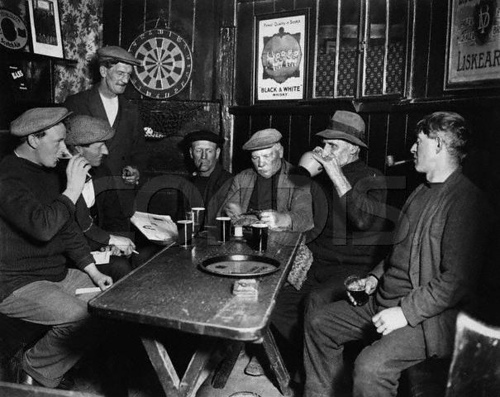
I posted a few photos of knitting ideas this week, and when I was thinking about what to post to round on the week’s set, I got to thinking about men knitting.
Several times, I’ve had old white men come up to me while I’m knitting (or especially the few times Galen has been knitting in public), and they’ve talked about how they used to knit, or about how all their sailor or fisherman coworkers used to knit their own socks, hats and sweaters. People in my grandparents’ generation. Pretty much the exact dudes in that photo. The middle one is knitting. Can you tell? That’s my usual move, knitting while everybody else drinks beer.
My gramma, who has been my main knitting tutor other than books, is totally unphased about men knitting. She seems to find it normal and expected, which strikes me as odd since knitting is now cast as such a gendered activity, as a feminine art to be reclaimed and valued, as something our grandmothers did. When guys knit now, it’s celebrated as a happy transgression similar to chicks fixing cars. I should ask my grandparents about this, see if they remember a break when western or North American men stopped knitting.
(My brief googling for pictures of men knitting turned up lots of men knitting within apparently conventional knitting roles in Peru — Andean male knitting traditions are well-known— as well as Turkey, plus net-makers all over the place. Only the young urban male knitters in North America had any kind of “breaking tradition” vibe happening. E.g., a drummer, a subway rider.)
I wonder if it has anything to do with different modes of transmitting knowledge. I’ve never seen any written knitting instructions or patterns geared to guys before the last few years (Knitting with Balls and the like). All the heaps of vintage commercial patterns I’ve seen are for the ladies. I would assume the knitting sailors and knitting workmen maybe learned it right from another person. I could also see job changes, mass production, world wars, and gendered income differences being involved in there.
I haven’t even tried to google this. It’s just going in a pile with other vague research topics that I casually keep an eye out for. Knitting grandfathers. Maybe I’ve got some.
Huge knitted sash, clothes with tassels
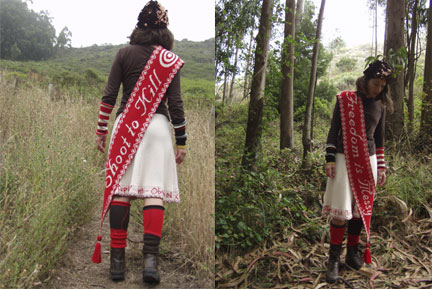
This is a couple of years old, but it is still my favourite thing at Steal This Sweater. It doesn’t even make sense as clothes, only as decoration.
Fertility awareness, old feelings, heart connection
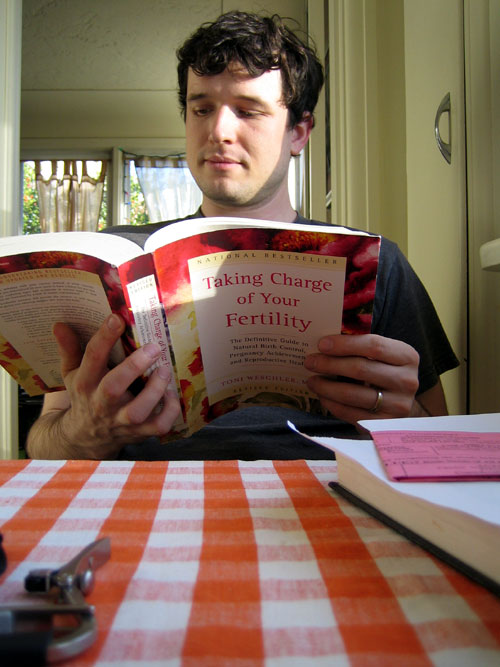
Galen is reading Taking Charge of Your Fertility. Partway through a chapter, he popped in to do a dance of excitement about how interesting he is finding fertility awareness. Ovaries! Mucus! Feedback cycles! DIY science! He asked whether it would have been cool to learn about cycle charting when I was thirteen or so, so I could have had a lifetime archive of data about my reproductive health. Wow, that caused a lot of feelings at once.
First, go team! It is useful and friendly for bio-guys to learn about female physiology, reproductive health, menstrual cycles and all that. I still tell people gleefully about the time last year that (male) Galen and our (male) friend Nathan were discussing their favourite features of the diva cup. (“Well it has marks so you can measure your blood.”) Doing their part to make the world safe for menstruators.
But also, awww, yes I do wish I’d known interesting ways to chart when I was starting out, or had any decent period information. It is amazing to me that after a solid eight or nine years of purposely investigating menstruation and cultivating positive attitudes and general insatiable curiosity, I still get ambushed by leftover sad feelings around menstrual cycles.
I don’t seem to have had an especially negative or ignorant upbringing compared to other people I know, but I managed to accumulate a fair amount of emotional trauma about periods just through a general lack of self-determination as a teenager. Dumb everyday stuff, like I was neither in charge of buying my own underwear nor in charge of how the laundry got done when I lived with my parents, so I was constantly frustrated and embarrassed (and often getting yelled at) about dealing with period laundry. It seems like surely I could have been responsible for either or both of those things if it had occurred to me— I don’t think my parents were that authoritarian— but strangely I remember arguing about wanting to do my own laundry my own way and being unable to work out any arrangement. Even now, I often find simple plans impossible to coordinate with my parents, for reasons I can rarely even remember. It’s deeply confusing. I think part of my lingering upset about menstrual cycles is actually due to the fact that I can’t recall any coherent explanations for past conflicts on the subject. Hmm.
Galen knows all this, at least superficially. I talk about vagina-related feelings with pretty much anyone who’s up for it. The most recent neighbourhood rock club was on the theme of songs to change your past and I picked a song that might have prevented me from going on the pill if I’d heard it while I was resigning myself to modern living through pharmacology. (In The Evening by Nina Nastasia and Jim White, because it makes me feel stubborn and that’s what I needed to be.)
I am sad that I ate all those chemicals, and that it seems to have done some damage to my cervical crypts (where the infamous eggwhite fertile mucus is produced). Sad sad sad. Angry too, to feel so misinformed. Disappointed that I didn’t listen to my own better judgment, and betrayed on behalf of the part of me with better judgment. I said most of that at rock club, but I’m not sure that is something people can relate to without a fair amount of relevant experience or other knowledge. Erin afterwards said she had a grieving process about the pill. Me too, going on it and again going off.
So Galen’s latest round of excitement about menstrual cycles is complicated. I was immediately glad to have company, and also immediately lonely, realizing I’m cut off from the possibility of feeling simple, impersonal excitement about uteruses and their ways. It was good to realize that he’s in the rather privileged position of not having personal emotional baggage about menstrual cycles. Once I managed to make him all sad about my damaged cervical crypts and assorted teen angst, we had a better connection there. It’s good to be on the same team.
So. For my future babies, I keep track of books like Cycle Savvy, in case they don’t want to talk with me about their personal strategies and feelings about periods.
Pets, sex, reading about tantra
During a mission to get a couple of books for holiday gifts (look out family, I have eliminated my filter on gifts related to self-help and patriarchy), I picked up a copy of Urban Tantra for myself. The author, Barbara Carrellas, seems like a fab and interesting person in the realm of Annie Sprinkle, Betty Dodson, Kate Bornstein, etc., so I decided to risk offending my atheist sensibilities.
So far, as long as I interpret all talk of Kundalini snakes and chakra colours metaphorically and keep an eye out for my personal standards of cultural appropriation, the ideas and practices in the book are useful and fun and kind of adorable. I laugh with delight at least twice per chapter. It helps that besides being “urban,” the book is super queer, feminist, safety-aware, BDSM-friendly and supportive of sex workers.
My top delighted giggle so far is this suggestion from the chapter called “How to Touch.” She’s talking about something she calls “the Resilient Edge of Resistance,” a balance between pressure and support, touch that isn’t too hard or too light but just at the edge where you can gradually go further. She suggests some exercises to practice finding this edge, including this one:
Practice by petting a cat or a dog. Pets give great feedback. If they stick around and beg for more, you’ve found their Resilient Edge of Resistance.
I don’t usually think of that as feedback, but of course it is! I’m happy to see somebody giving pets credit for being in touch with their bodies and uninhibited about communicating feedback. That seems genuinely body-positive, to not just acknowledge our animal natures but admire other animals’ skills.
Fashion model with Asperger’s. Huh.
After reading this fairly incidental profile of a Top Model contestant with Asperger’s Syndrome, I am wondering if fashion model is the most mind-bendingly ironic job for someone with a diagnosable inability to conform to social expectations. Maybe an Aspie con artist would be more unexpected.
Scars, gray hair, “real” beauty
A photo: where I’ve been, by dayzoid on Flickr. A self-portrait I think.
I like this scar— I like looking at most scars, and I work on looking at the rest. But the photo itself seems like the kind of thing that gets referred to as “real” beauty in skincare advertising. An older woman, but with flattering makeup and lighting. Gray hair, but stylish and even. Not a bone rack, but posed to look smooth and curvy, never lumpy or saggy or folded. Making some kind of cute and peaceful facial expression. Definitely feminine, but not sexual (not coincidentally, usually looking freshly washed and clean). It’s a very contrived and limited type of “real.” Looking again, this photo is not as extreme as all that, but the demure smile and the smooth white hair reminded me.
I don’t get why more people don’t rant about how patronizing it is to use “real” as a euphemism for old or fat. I can’t decide if it is better or worse than the older concepts of “imperfect beauty” or “inner beauty.” There are probably more phrases in body image activism that drive me bonkers. The whole focus seems off to me— I don’t think it helps anyone to offer these alternate, consolation prize types of beauty, more ways to win at being beautiful. That doesn’t do anything to get away from ranking people or competing. I really think the focus should be on learning to see more kinds of beauty, to be a better beholder.
Scar pride

At first I was just looking for a few photos of people’s scars, having been reminded by Erin’s copy of the Learning to Love You More book. But, in typical internetto fashion, now I am intrigued by the patterns that show up when you look at a mass of public scar photos. There are some popular subjects— self-harm exhibitionism and processing, scars from pregnancy and cesarians (not so much finding episiotomy scar pics), voyeurism with optional processing (especially around major burn scars, and ritualized scarification by some African cultures), manifestos and statements about beauty and beautiful scars, and more general scar pride and storytelling. I find this last one the least complicated, the easiest to post photos without major accompanying comments. (In this one I’m only spotting basics, about how it’s easier to be proud of pretty much anything when you are cute and posing, but I still like how that calculator watch makes her look tough.)
Various marriage- and baby-related plans
- I think I want to get divorced sometime. Sorry marriage, I just don’t care about you. It would be much funnier to be divorced to my loverman, and introduce him as my ex-husband. The former Mr. Mundy. I think this would offer a much more accurate shorthand expression of our relationship. Right now I think the government approval is confusing.
- So I am trying to figure out how to not have that look like we tricked people into giving us wedding presents. Because it wasn’t like that. (Except for the usual capitalist / consolidation-of-wealth aspects of the whole institution of marriage, but we actually work pretty hard to get around a lot of that.)
- This would solve my main wedding-related regret, which was forfeiting the opportunity to birth a third-generation bastard. Both Galen and I were conceived out of wedlock, and so were his mum and my dad. I think this is a proud heritage, even if it makes my dad roll his eyes.
- I would be willing to conceive a baby in wedlock (but not in a headlock) and then birth it outside of wedlock.
- Also I am considering not disclosing the sex of any children I might squeeze out for at least a few days after they are born, to give them some space to be treated as ambiguous slugs. I don’t think that’s weird, but Galen thinks it might freak people out. So heads up, people who would be meeting these hypothetical spawn.
- I guess that means they might not get named for a few days, also.
“Motto for LA”

Boy terror
The rest of that horror essay I was quoting yesterday debates a super-Freudian interpretation of the “final girl” in slasher films— the one who doesn’t die— as a simultaneous castrator and phallus-envier. Cut something off that monster and wave your big knife in the air, ladies. The horror can’t end until the cocks are properly distributed according to your moral fortitude. Meh.
After all the feminist sexuality reading I usually do, it is bizarre to read an essay where somebody takes Freud seriously, even temporarily. Nobody seems to get away with discussing Freud’s take on sexuality without at least a disclaimer about the myth of vaginal orgasms, but in discussing horror apparently it is acceptable to dive into repressed womb envy and castration complexes with all sincerity. Maybe the academic tone of the essay disguised the author’s disdain, but it seemed like she was buying it.
I got a lot more interested when she started pondering why it has been so much easier to have women transition into monster-killing hero roles on film than to spend any screen time on men screaming in terror. Gender as theatre, this is more my speed. It actually made me sad for guys, to think of (mostly) guys in the ’80s making slasher movies for (mostly) other guys and having to kill all the men quickly in the distance while the women got butchered in close-ups. The audience’s only chance to identify with fear in most of those movies was through feminine characters. Men had a very limited range of possible emotions and options for expressing them. How were people supposed to learn about masculine fear? That’s terrible!
The author pointed out that the cliched lack of stereotypical femininity in the surviving girl (always the smart one, or the one wearing pants, or the one who doesn’t put out… also usually the one named Stevie or Georgie or something) might not just be about misogynistically killing all the feminine or sexually active women. She suggests it’s about giving guys a somewhat mannish hero to identify with, since an actual terrified man is off limits. The last girl is the character who realizes the full scope of the danger— she’s the most afraid, and spends the most time being afraid. Those are the interesting emotions, the ones that prompt the shivers and startles. I think it’s terrible that it’s still largely taboo for that to be a man’s role! Hopefully my kids will be able to activate their repressed fears with screaming victims of all genders.
If anybody knows some movies where men scream and cry in terror (preferably half naked?), do tell. I feel like I must know some, but all I can think of at the moment is Deliverance. Maybe some war movies would fit the bill.
“Babe of the day”

Casey phoned the other day to ask about my top photos of undressed women, as a response to seeing one of those lame “babe of the day” widgets on somebody’s Facebook profile. (I think he wanted to build an arsenal, in case he had the opportunity to unleash it on somebody.) I am pleased that somebody thinks I am a potential resource for images of people who are sexy in the body hair and bellies kind of way, but I don’t have a stash of that stuff at all.
For a start, I thought of Rose and Olive, photographers I found awhile ago, I think on Warren Ellis’ blog. Their photos are often quite posed, and they seem caught up in starving artist glamour and that artier version of girls gone wild that hipsters like (wet shirts, polaroids, poetry…), and they have a blog at Nerve.com which is a creepy place to have a blog… and the photo above is one of only two black models in their entire archive as well as one of a very few models who look older than nineteen and aren’t showcasing skinny bony shoulders… but also, they seem to know that wide thighs and forehead wrinkles and messes are beautiful, and they seem sincere, so I pick and choose from their photos.
I appreciate the love of armpits, textures and complicated facial expressions going on in this photo, and the way the model is kinda subverting a classic pin-up pose. It makes me want to be on that roof, in that light, touching skin with somebody. So this might go in my babe of the day stash, if I had one.
Imax, slasher films, pornography
I feel a meandering mind-map coming on, starting from an essay about slasher movies by Carol Clover (roughly summarized here ) that I read in this anthology about gender in myth.
On the civilized side of the continuum lie the legitimate genres; at the other end, hard on the unconscious, lie the sensation or ‘body’ genres, horror and pornography, in that order. …
It is a rare Hollywood film that does not devote a passage or two— a car chase, a sex scene— to the emotional and physical excitement of the audience. But horror and pornography are the only two genres specifically devoted to the arousal of bodily sensation. They exist solely to horrify and stimulate, not always respectively, and their ability to do so is the sole measure of their success…
I’ve seen a lot of people try to show that horror and pornography are related, usually based on some inarticulate statement about the similarity of sex and death. This bodily-sensation aspect seems like a more accurate connection. It’s got me editing my ideas about pornography (again), too.
For the last couple of years, my working definition has been that something is pornographic (to me) when it is presented for its own sake with no intention to communicate further meaning. Literal as opposed to symbolic, I guess. Showing literal sex rather than any experience of eroticism, or showing literal blood and gore rather than communicating a meaning of injury or death or fear (a la gore-porn). I don’t mean that as a diss to actual porn, more as an explanation of why I call Cute Overload cute-porn, and why I sometimes object to the ways other people use hyphenated, non-sexual porn labels. (I’m not sure I experience the Ikea catalog as storage-porn just because it shows a lot of shelving.)
This sensation definition is way simpler, and avoids having to argue about what is meaningful or symbolic. Since porn is some of the most intensely deconstructed media around and easily supplied with symbolic meaning, I think this simple sensation definition is a lot more accurate too. So thanks for that, early nineties essay collection.
Thinking about movies that are made for my body got me thinking about imax. All I want from a six-story tall movie is a strong sense of vertigo! I see an imax film about once every two years, but in my limited sampling they seem to be getting less motion-sick overall. Anybody have better evidence on that? (Tosczaks, or other bearers of yearly passes?) At the least, I’ve been disappointed with the imax films I’ve been seeing. I don’t want a plot at the imax, I want a bodily experience. More helicopter shots going over a cliff, please. I want imax to be more pornographic. Imax has not been fulfilling its potential.
So yup. The other idea I want to store here is about “legitimate” genres. I don’t really buy the idea that they’re less focussed on bodily sensations. The most pretentious, high-class films I’ve seen could be called superiority-porn. Feeling superior is a real sensation, although not often acknowledged as a physical/chemical state. I just dug up a clip from the Helvetica movie where Erik Spiekermann explains that he just likes looking at type. “Other people look at bottles of wine, or whatever, or you know, girls’ bottoms. I look at type.” He looks; it feels good. I’ve only seen the trailers, but that documentary is clearly modernist-typography-porn, and totally classy. (Or, ahem, neutral.)
The pretense seems to be that some cinematically-induced sensations are intellectual, rather than bodily, which actually seems very similar to my original working definition about pornography being devoid of meaning. So again, why am I reading anthologies about symbol and myth in these “body” genres if they are so literal and physical? This seems like a very weird manifestation of the usual classist aesthetic distinctions, where “legitimate” good taste just happens to be whatever working class / uneducated / trashy people don’t appreciate. Classy movies are secretly about sensations, and trashy movies are secretly full of cultural symbolism. Oops.
I’m probably specifically bad at this game— personality quiz questions on the theme of “do you pay more attention to rational thoughts or gut feelings” make my head explode, because surely thoughts and feelings exist in the same soup. I mean, you have to feel whether you’re being honest about your logic; I don’t know any other way. From now on I’m paying special attention to how my body feels when I watch fancy art films.
Reading Marjane Satrapi interviews
A hand-animated movie version of Persepolis, Marjane Satrapi’s two-part graphic novel about growing up in Iran during the 1980s Islamic Revolution, will apparently be out on December 25. I’m curious about this movie. I read the first of the two books quite awhile ago, and I remember liking it, but I’ve been doing a lot of thinking and learning since then and I wonder how I’d find it now. I think it has promise.
Out of this curiosity, I’ve been reading a bunch of interviews with Marjane Satrapi. She’s pretty opinionated and direct, so even though the same topics come up over and over, I like to read her responses.
Most press I’ve seen about her is by writers who see her books as “complex,” because she writes about “good” people who do bad things and “bad” people who do good things. In interviews, she talks a lot about dealing with people as individuals rather than making assumptions based on their culture or race (that really doesn’t sound complex). But in this recent promo interview in the NY Times, the journalist seems to want Satrapi to act as an anti-fundamentalism or anti-Islam spokeswoman, rather than taking the usual “complex,” general progressive stance.
All that intro (hmm…) so that I can announce: I love the turn that interview takes, right here.
Your books denounce Islamic fanaticism, particularly as it curtails the rights of women. Is that your main theme? Oh, no, not at all. I don’t consider myself as a feminist but more a humanist.
Still, in your work, you are constantly contrasting your love of food, smoking and sensual pleasures with the acts of self-denial demanded by the mullahs, like wearing a chador. It’s a problem for women no matter the religion or the society. If in Muslim countries they try to cover the woman, in America they try to make them look like a piece of meat.
Are you suggesting that veiling and unveiling women are equally reductive? I disagree. We have to look at ourselves here also. Why do all the women get plastic surgery? Why? Why? Why should we look like some freaks with big lips that look like an anus? What is so sexy about that? What is sexy about having something that looks like a goose anus?
I never really thought about goose anatomy. I looked when I was on a farm in France.
I am making an effort to barf more on this blog, and to write long-winded, feelings-based rambles like when I first started making the vagina website, ages ago. But I am still self-conscious about it. I have realized that even though I was always in favour of keeping my various websites fairly integrated and putting the vagina website on my resume etc, it’s been a really long time since I wrote anywhere that I actually expected my friends might read, rather than just writing for internet strangers. Not as fearless as I thought. So, working on that. Fewer “this sure is long” disclaimers in the future.
Red and blue, glass and shoes

When I wore mary janes a lot, I used to be into the toes turned in thing. This photo is suddenly making me uncomfortable about it, presented like that with no irony at all regarding women in fancy shoes standing like little girls. I’m hoping my general hairiness was enough to contrast and balance the baby toes.
I had never related the toes to the shoes until last week. I noticed that when I wear my boots I tend to stand like Captain America, feet planted especially wide. Design affordance, I guess. Superhero boots afford superhero stances.
About this new design
I feel like a bit of a wanker talking about My New Website Design since the point for me is to be self-explanatory (I already talked about this stuff by posting the design). But I do like talking about design in regular words too, so here goes.
- The monster’s name is Pearl. That takes some pressure off.
- Mouthful of words.
- Guts out.
- Memento mori in general, and in specific.
- These colours make me want to work.
- The monster is modelled after the radiator that faces our toilet.

- There are more hiding throughout the apartment.
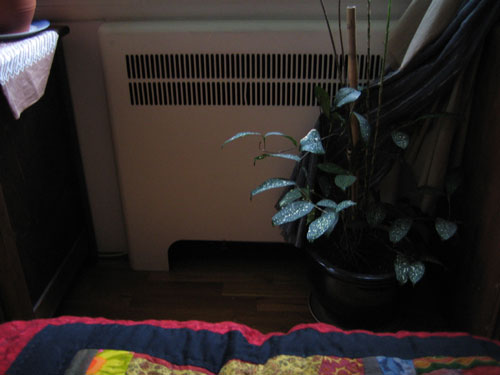
- I thought a lot about Dark Daughta’s confrontational visual design, and mainly I came up with this badly drawn, blurry, lo-fi business. Trying to draw makes me happy. Goofy pixellation makes me happy. Siding with purposeful low quality makes me happy.
- This is about the best drawing I can currently do, which is embarrassing for somebody who makes a living doing design. Working on it. Bad drawing does no harm to mother earth.
- The title font is AUdimat by The Smeltery. I like the f.
Sex, death and consensual education

I’ve finished reading Instead of Education, one of John Holt’s influential tomes about unschooling and home schooling. As soon as I started typing my notes into the thesis wiki, I had to make a Vagina deja vu category to keep track of all the concepts I recognized from studying women’s sexuality and reproduction over at All About My Vagina. The root of all the deja vu seems to be one single thing, and it’s one of my favourite things, too! It’s consent.
John Holt spends a lot of Instead of Education making the point that compulsory education is, by nature, oppressive and unethical. (The book is a bona fide manifesto! ‘Students, you have nothing to lose but your chains’… the whole deal. I liked it.) My favourite quotes on this topic are in the wiki:
This seemed vaguely familiar, but I couldn’t put my finger on why until, about a hundred pages in, Holt started writing about teacher-learner relationships. He insists that because these relationships involve one person assuming a position of authority and power (the teacher), teaching relationships need to be temporary, well defined, and free to leave. Maybe I’m the only person who hears that and thinks immediately of BDSM, but I think it’s a really useful parallel!
There is a huge amount of sex writing about boundaries, relationships, temporary roles, domination and, above all, consent. I think what John Holt was after was consensual education. When he talks about the impossibility of consensual education within the framework of compulsory schooling, he sounds exactly like lesbian feminists who believe hetero sex is automatically oppressive within a patriarchal society. It’s about consent, and the circumstances under which it is possible.
My favourite discussion of consensual sex is The Ethical Slut‘s characterization of consent as an active collaboration for the benefit, well-being and pleasure of all persons concerned. An ‘active collaboration’ is exactly the kind of learning John Holt promoted. E.g.,
Like a few children I know in the U.S., [unschooled children from Ny Lilleskole in Denmark] are probably much more able than most of their [conventional] schoolmates (who can only submit or resist it) to make use of [conventional] school, to get from it at least some of the things they want for their own reasons.
It makes perfect sense that a freedom loving gal such as myself would want all relationships to be consensual, but I’d never thought of teaching as a relationship. I started to wonder what other situations I might enjoy more by examining the relationships involved and finding ways to make them consensual.
I think this definitely applies to self-defense (I had trouble making sense of it until I realized that being attacked is a relationship, not a situation). Cooperation and competition in business is another one.
Mainly though, I think this might be a good way to think about dying and death. There are obvious hot topics about death and consent (euthanasia, living wills, etc), but I wonder what could be gained by trying to have a consensual relationship with Death itself. It clearly has terms of engagement; maybe I could come up with my own set of terms and we could collaborate.
Our town
Last night I found more people who have independently created a fantasy about choosing a small town and moving there with all their friends. This makes… five times, I think, in the last few months, that I’ve run into this daydream.
It’s straightforward enough: pick a small town with cheap real estate, move there with all your friends. All of you make some contribution like growing organic vegetables or opening an indie cinema. Get enough people on board to make the town really cool. Optional bonus features include buying a huge statue for the center of town— say, one of the Lenins that periodically gets offloaded by former Eastern block countries— or hiring a promising architecture student to design a whole street or subdivision, like a mini version of Gaudi’s Barcelona.
I’ve heard different opinions on the ethics of taking over a town, and how to be respectful of the existing townsfolk, but the main idea doesn’t seem to surprise anybody.
So now I’m curious. Why is this such a common fantasy right now? What is it about?
I wonder about a couple of things. (Warning: I’m high on coffee and I’m about to dork out.)
Fear of complexity. I might as well put this first; it’s the only thing I seem to talk about these days. Is the desire to move to a small town, where it is easy to be influential, a reaction to overwhelming complexity? Cities are second only to maybe anthills as the most commonly discussed example of systems that are too complex to understand or control without special new theories, and where individual actions have unpredictable impacts on the whole. Could moving to a small town be a way to get away from information overload and find a less confusing, more simplistic cultural life?
The death of indie. I’ve complained before about how the indie/hipster counterculture has become pretty much just a commercial shopping habit. We’ve had what, twenty five years worth of young people moving to the big city to get in the loop with indie culture (meet tastemakers, be creative, go to shows, buy sneakers, etc)? I think of moving to a small town as a hipster fantasy, because that’s who I hear it from and also because having a freelance creative job— the kind of thing you could transplant to a small town— is kind of a hipster ideal. Are hipsters ready to find a new way to be countercultural, now that everything indie is so mainstream and so designer? Seeking cheap rent is, to me, usually a sign that people want more time to work on changing something, or more time to participate in something meaningful. Or, is this like the last gasp of hipster vanity, to get into a pond so small that you can be indie and amateur and still be the biggest fish around?
Displacement. The more obvious factor is just how expensive cities are getting, and this one in particular. This is basic gentrification— a neighbourhood gets expensive and only one kind of people can afford to live there anymore. All the diverse tradespeople, artists, families, students, businesses and various workers who made the neighbourhood awesome go somewhere cheaper. Maybe this desire for everybody to move to the same place is just a survival instinct, trying to preserve the diverse, fun city life by moving it to a sort of cultural nature reserve. Is the idea of moving to a remote, small, undesirable town a protective manoeuver, to get as far away as possible from invasive condo developments, and to avoid ever being displaced again?
OK! No more explainy voice! I keep turning this over in my head to see if it would actually be an awesome thing to do, or whether it would be a weird, defensive, vain thing to do. I can’t decide. (I also can’t imagine getting many people to commit to such a plan… but still I must get to the bottom of it, for some reason.)
Swallowing the toad
I’ve been catching up on some internetto that I neglected while I was on vacation, and while I was really busy before I went on vacation. So I was listening to an October podcast on 43 folders, where Merlin Mann interviews David Allen about procrastination.
It’s a great little interview, although I didn’t get any new ideas out of it (probably because I’ve read practically everything Merlin has every published on the internet… while avoiding work of course). But I did get really fascinated by the phrases and metaphors David used to describe the kind of personal epiphany where you stop being afraid of secret parts of yourself, and just get on with your life. He first describes the topic starting at 2:18.
The thing that is closest to your soul is the thing you’re gonna avoid the most. The thing that will tap into… the part of you that has not yet come to the fore but wants to be expressed but you’re so afraid of it— you will absolutely find every single thing in your life to avoid doing that.
And that one… there is no trick about that one. You just need to be aware of that.
(Aside: business people are so much more into self help than aging single women. I’m waiting for a Bridget Jones type franchise about a bumbling marketing manager with a heart of gold.)
This being-aware-of-your-fear thing is kind of an ongoing theme in our house. I’m really big on solving personal distress by looking for the scariest or most embarrassing course of action, since it is probably the thing I want to do the most. Lately, Galen has been into a similar thing— in his gentler way— of trying not to be afraid by accident. These both sound just like what David mentions.
I don’t have a name for these assorted processes, but I like to collect the metaphors people use to describe them. I say things like “it popped” or “pop the cork” a lot, or things like “cut to the chase”— aggressive shortcuts. Alternately, I talk about hunting and finding and getting to the bottom of things, about being thorough or honest. And then I have my hard-ass forms of encouragement like “grow up,” “suck it up” and “skip to the good part.”
The David uses some familiar words—
- jump right to the real bottom line
- show up
- uncork
- step up to the plate
It’s funny to me that a mental experience can spark common physical metaphors in different people. I’m a little weirded out by how kinetic— almost violent— most of these are. Pop, jump, cut.
So, simple contrast might be the main reason I like my favourite version so much. I found this description on a random mailing list archive: swallowing the toad. Evocative, yet gentle! It’s more like “take your medicine” than “smash your fear,” and I appreciate a peaceful option.
The post attributed the phrase to Jung, but I haven’t been able to find other references to this anywhere. Maybe it’s a blissful mistranslation? In any case, cheers to finding more toads.
This is the dawning…
This is a bit flaky, but I’d like to propose that we are living in The Age of Complexity. Not the information age, or the age of media, internet, connectivity or whatever, but the age of complexity. I think that’s the primary obstacle in modern problems and stresses: how to stop clinging to simplified half-truths and start understanding complex, interconnected systems. Naming the thing might help us to remember to figure it out.
Complexity— and how counter-intuitive everybody seems to find it— comes up everywhere these days: in media and internet, software design, urban planning, health, environmentalism, psychology, and anything that tries to organize a group of people. I think George Lakoff’s work with the Rockridge Institute, to provide priorities and frames for progressive ideas, is part of dealing with complexity, even though his books are about politics and linguistics, not systems theory.
I’ve been thinking about generalism and distributed knowledge for my independent education project, too, which just struck me as a sort of complex system of learning. Rather than specializing in a particular field, I’m trying to figure out what would count as graduate level work on a general problem (the topic so far is what I want my death to be like). And rather than hook up with a structure or institution, I’m trying to use a lot of small, independent resources. This pleases me more and more, because it suits how I think about information and the web, etc. (Is that called symmetry, when different levels or parts of a system have the same patterns?)
So. This is the link that finally put me over the edge, when I was catching up on Kottke today.
I wanted to ask a more general question: how can people stop needing simple stories, and what can we use instead? I remember, back when I first started making websites in the ’90s, when I first understood hypertext as an alternative to linear narrative, it seemed like the same idea that Kottke is looking at, up there, in the history of science. (How’s that for a hyper sentence, remembering things in the past and present? It seems accurate so I’m going to leave it.) My favourite websites are still the ones that use links as complex context, instead of in sequence.
All of this is just the last chapter of Death and Life of Great American Cities all over again. That’s the chapter where Jane Jacobs describes the kind of problem a city is, and suggests that human knowledge needs new tools to understand organized complexity. The longer I live after reading that book, the more I can’t believe how many people haven’t read it, or how I hadn’t heard of it until I was 25. I come back to that book all the time, and it wasn’t even the first thing I read about complexity or emergent systems.
I think the reason Death and Life had such an impact on me might be because Jane Jacobs is so definite and concrete in that book— she really captures the “aha” of suddenly seeing patterns in chaos, of seeing the bigger, realer simplicity. She sums up the problem of cities in only four principles. Four!
The books I’d read before were much looser. Christopher Alexander’s pattern language for designing houses and cities has over 200 items. Godel, Escher, Bach never intends to sum up intelligence in a set of patterns, although it nearly does anyway. Jane Jacobs got her perspective down to a tight, efficient package, without simplifying anything. It’s inspiring.
There are more general introductions to complexity and emergence (like say, Emergence), but I would still recommend Death and Life as the essential tome on the subject. So far. I’m still learning.